
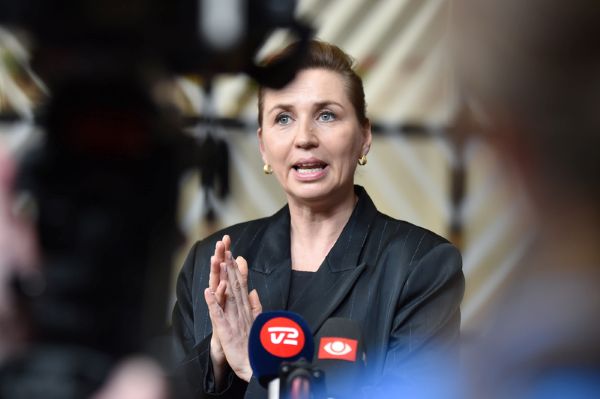
Danish Prime Minister Mette Frederiksen announced on Thursday that Denmark will conduct a parliamentary election on 24th March, several months earlier than usual, particularly in light of recent tensions with the United States over President Donald Trump‘s interest in Greenland.
In the upcoming election, voters will elect representatives for the 179 seats of the Folketing, the Danish parliament. Of these, 175 seats are designated for lawmakers representing Denmark, while the remaining four seats are allocated to the kingdom’s two semi-autonomous territories: Greenland and the Faroe Islands. To secure a majority within the parliament, a party must obtain 90 seats. Additionally, there is a 2% threshold for parties seeking representation in the parliament. Currently, 12 political parties are represented in the Danish parliament, alongside designated members from the Faroe Islands and Greenland.
“It is now up to you, the voters, to decide what direction Denmark will take over the next four years. And I am looking forward to it,” Frederiksen said as she made her announcement in parliament.
A general election is mandated to occur at least every four years; however, the prime minister of Denmark has the authority to call for one at any time. The most recent election took place on 1st November 2022, resulting in a coalition of three parties spanning the political spectrum.
Mette Frederiksen, a member of the centre-left Social Democrats, has served as Denmark’s prime minister since mid-2019. Currently, she leads a government that includes the Liberal Party, represented by Defence Minister Troels Lund Poulsen, as well as the centrist Moderate Party, led by Foreign Minister Lars Løkke Rasmussen, a former prime minister.
Over the past year, the government has faced a significant challenge stemming from Trump’s proposal to annex Greenland. In response, the United States, Denmark, and Greenland held technical discussions on an Arctic security agreement. Frederiksen and other Danish and Greenlandic officials have affirmed that sovereignty cannot be negotiated.
Earlier this month, Frederiksen expressed her continuing caution regarding these matters, despite a noted cooling of the crisis. Asked at the Munich Security Conference whether the crisis had passed, she replied: “No, unfortunately not. I think the U.S. president’s desire is exactly the same. He is very serious about this theme.”
According to a recent poll conducted by Voxmeter in February, the government coalition parties have the support of 41.3% of voters, while opposition parties enjoy 58.3% support. However, this statistic may not carry much weight, as the nine opposition parties range from far-right to far-left and have significant ideological differences that are hard to reconcile. The poll indicates that the Social Democrats have 22.1% support and various options to form a centre-left or centre coalition after the elections. However, it is unclear whether the current Prime Minister, Mette Frederiksen, will remain in office after the election.
This article used information from The Associated Press.
