
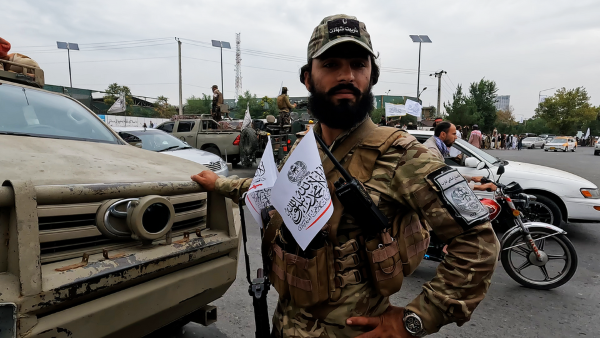
A delegation from the Afghan Taliban met with European Union officials in Brussels on Tuesday. These closed-door talks centred on enhancing diplomatic relations and addressing the “dignified return” of Afghan nationals to their country, which has been significantly impacted by conflict and isolation.
Afghans constitute one of the largest groups of individuals seeking asylum within the European Union; however, an increasing number of EU member states are pursuing measures to expedite and intensify deportations for individuals whose asylum applications have been denied or who have committed offences in their respective host countries.
Abdul Qahar Balkhi, spokesperson for the Taliban’s Ministry of Foreign Affairs, characterised this visit as “historic,” noting that it marked the first official discussions between the Islamic Emirate and both the EU and its member states in Brussels. Balkhi, who led a delegation of five, emphasised that the agenda included “trust-building measures,” the establishment of a Taliban diplomatic presence within the EU, and the facilitation of a “dignified return process” for Afghan returnees.
The meeting was held at a confidential location in Brussels, where both the EU and NATO are headquartered. The European Commission indicated that it co-chaired the discussions alongside Sweden, with representatives from 15 of the EU’s 27 member states participating in dialogues aimed at addressing the deportation of individuals categorised as security threats or criminals.
Concerns about Afghan refugees’ security in and out of Europe
Afghan authorities have imposed severe restrictions on rights, especially for women and girls, since the Taliban took power in 2021 after the chaotic US withdrawal. Rights groups are concerned that a recent EU meeting with the Taliban undermines human rights obligations and could endanger people in Europe and Afghanistan.
Fereshta Abbasi from Human Rights Watch stated that any engagement with the Taliban should prioritise human rights, not the deportation of Afghans to danger.
Although no EU nation recognises the Taliban, the meeting in Brussels indicates a slight shift in the group’s diplomatic isolation. Most countries, including the EU, severed diplomatic ties when the Taliban took over. However, the Taliban has been gaining access to European diplomatic missions. Afghan activist Malala Yousafzai warned that the EU should not legitimise a regime responsible for grave human rights violations.
The Taliban delegates were granted limited visas allowing them 24 hours in Belgium. Belgian Foreign Minister Maxime Prévot clarified that facilitating the meeting doesn’t imply recognition or legitimacy of the Taliban, as the meeting did not occur at official sites.
Many EU countries want increased deportations
A spokesperson for the European Commission recently indicated that the meeting was convened in response to the concerns expressed by a significant majority of the 27 EU member states. Specifically, 20 member states signed a letter in October advocating for enhanced migration policies, including increased deportations. Spokesperson Markus Lammert stated that the Commission has been tasked with coordinating “technical talks” regarding returns, noting that this does not imply any formal recognition of the Taliban.
This meeting represents the first formal interaction between the Taliban and representatives of the EU; however, the initial discussion took place in January in Afghanistan, when the Commission dispatched a mission to Kabul. Additionally, the Commission continues to maintain staff in the region.
The October letter was partially drafted by Belgian Migration Minister Anneleen Van Bossuyt, who emphasised that “we can no longer afford a standstill. It is high time for a firm and joint approach to ensure that Europe can regain control over migration and security.” Minister Van Bossuyt also highlighted that across the EU, only 2% of the 22,870 Afghans ordered to return have actually returned.
Afghanistan faces humanitarian disaster
Afghanistan is facing a crisis with the return of about 3 million Afghans from Pakistan and Iran in the past year, most of whom were forcibly repatriated. This situation has worsened an existing humanitarian disaster marked by food shortages and economic struggles, compounded by severe sanctions.
The Taliban has imposed strict restrictions on women and girls, including bans on education beyond primary school and limited job opportunities, along with regulations on public attire.
Eve Geddie, Director of Amnesty International’s European Institutions Office, noted, “It is unconscionable that the EU would now try to deport people to Afghanistan, which has only become more dangerous.”
In response to political pressure, the EU has enacted reforms to increase deportations, including establishing “return hubs,” enhancing surveillance, tightening border controls, and engaging with the Taliban. Meanwhile, the Taliban seeks humanitarian aid to alleviate the nation’s economic and political isolation.
This article used information from The Associated Press.
