
The European Union has released a new report highlighting that the bloc is on track to meet its 2030 emission and climate targets and has successfully lowered energy prices across its member states.
The State of the Energy Union 2025 reported a 2.5% decrease in greenhouse gas emissions in 2024 compared to the previous year, representing a 37.2% reduction from 1990 levels. The EU is aiming to reduce emissions by 55% from 1990 levels. The report also showed that the decrease in emissions came with a higher GDP since 1990, highlighting that climate targets and economic growth can coexist.
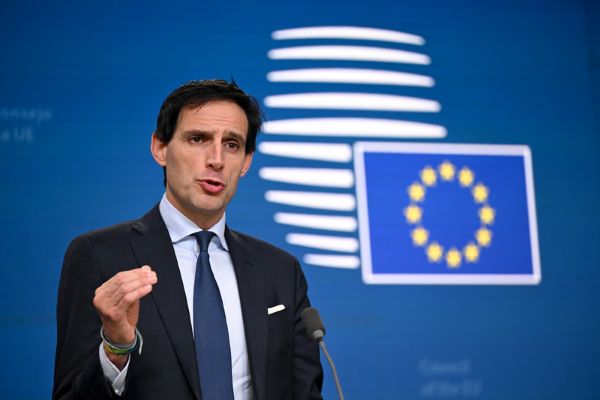
“The EU is proving that we can pursue ambitious climate action while strengthening our competitiveness and our independence at the same time,” said Wopke Hoekstra, Commissioner for Climate.
The Commission still believes that the EU is on track to meet its targets under the Affordable Energy Action Plan and Clean Industrial Deal, aiming to ensure cheaper energy prices.
“Europe is meeting its targets because we’re combining competitiveness, innovation and the fight against climate change,” commented Teresa Ribera, Executive Vice-President for Energy Transitions.
Despite this, the Commission recognises that there is still much to be done, with energy prices remaining higher in Europe compared to those in other continents and with considerable variation across member states. The Commission is launching a new action plan dedicated solely to this goal, with investments from the European Investment Bank and pilot projects to support energy companies.
The main goal is to advance the Commission’s Energy Union initiative, aiming for a more unified domestic production and consumption of energy, thereby reducing dependence on fossil fuels and promoting the use of renewable energy sources. The EU has already reported a massive drop in Russian fossil fuel imports, from 45% in 2021 to 12% by August 2025. In addition, the EU electricity mix in 2024 consists of 47% renewable sources, and most of the EU’s electricity is now produced via renewable sources, albeit with varying degrees across member states.
These results are considered positive, but the Commission still believes that more work is due.
The Commissioner for Energy and Housing, Dan Jorgenson, said that the EU “must go faster by speeding up deployment, invest more in infrastructure and ultimately bring down energy prices. Clean, secure and affordable energy is the foundation of a genuine Energy Union that delivers economic prosperity, a better environment and security to its citizens and businesses.”
