
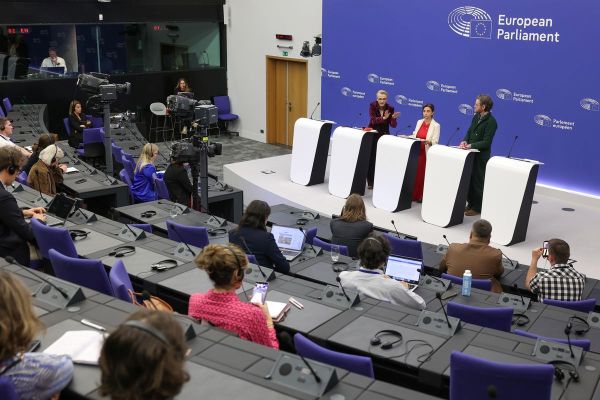
The European Parliament has urged the Commission to develop legislation that establishes a unified definition of rape grounded in the principles of freely given, informed, and revocable consent. In a report adopted on 28 April, the Parliament recorded 447 votes in favour, 160 against, and 43 abstentions. It calls upon member states that continue to utilise force- or violence-based definitions of rape to align their national laws with international standards, including the Istanbul Convention, which was ratified by the European Union in 2023.
“It is both morally and legally unacceptable that women are not protected by ‘only yes means yes’ legislation across the EU. We have been calling for a common European definition of rape for years, and although the Council prevented its inclusion as part of the directive on combating violence against women, more and more governments are recognising the need for this approach – since 2023, France, Finland, Luxembourg and the Netherlands have introduced consent-based laws. Momentum is with us: it’s time to deliver a common European definition of rape based on the absence of freely given and revocable consent,” said Civil Liberties Committee rapporteur Evin Incir (S&D, Sweden).
The Parliament’s report underscores that silence, the absence of resistance, lack of a clear refusal, prior consent, past sexual conduct, or any existing or prior relationship must not be construed as consent. Members of the European Parliament (MEPs) emphasise that consent should be assessed contextually, particularly in circumstances involving violence, threats, abuse of power, fear, intimidation, unconsciousness, intoxication, chemical submission, sleep, illness, disability, or vulnerability.
Moreover, MEPs advocate for the recognition of trauma responses—such as “freeze” or “fawn” responses—in both legislative and judicial frameworks. They have reiterated the necessity for recognising gender-based violence as an EU crime. The Parliament stresses that only a consent-based approach to rape legislation can ensure equitable access to justice.
“One in three women in the EU has experienced gender-based violence. One in twenty has been raped. Thanks to brave women like Gisèle Pelicot, there are growing calls for action. But we know that in our communities there are countless victims, many who will never see justice. Parliament is speaking up for justice by calling on the Commission to propose legislation, so we can actively improve the situation for women, moving beyond outdated laws to guarantee them the same level of protection across the EU,” highlighted Women’s Rights Committee rapporteur Joanna Scheuring-Wielgus (S&D, Poland).
Additionally, MEPs promote an intersectional and victim-centred framework at the EU level, which includes immediate access to medical care, sexual and reproductive healthcare, safe and legal abortion, trauma care, psychological support, and legal assistance. The report also calls for the establishment of free specialist support services, including 24-hour crisis centres that provide comprehensive medical, psychological, and legal assistance.
The report highlights the importance of regular and tailored mandatory training for professionals who may come into contact with rape victims, including law enforcement officers, judges, prosecutors, lawyers, healthcare professionals, and frontline workers. MEPs have requested that the Commission develop EU guidelines for comprehensive sexuality and relationship education by 2026.
Furthermore, they advocate for EU-wide awareness campaigns that address topics such as consent, relationships, sexual integrity, bodily autonomy, and counteracting harmful rape myths, anti-gender content, and incel propaganda on digital platforms.
