
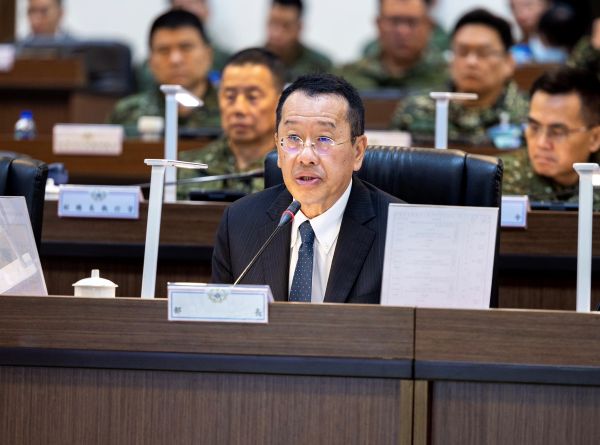
Taiwan’s Defence Minister Koo Li-hsiung, also known by his English name Wellington Koo, has minimised the significance of recent Chinese sanctions targeting seven European companies linked to arms sales to the island. He indicated that this is not the first instance of such actions from China and asserted that it would not impede Taiwan’s capability to procure weapons. On Friday, China’s Commerce Ministry placed these companies on its export control list, prohibiting the export of dual-use items—goods, software, or technologies with both civilian and military applications. This includes certain rare-earth elements that are crucial to the production of drones and chips.
Taiwan, which China views as its territory, mainly sources military equipment from the United States. For nearly 30 years, European nations have refrained from supplying major military equipment, such as fighter jets, to Taiwan out of fear of reprisals from Beijing.
In a parliamentary session, the Defence Minister noted that China’s sanctions are not a novel occurrence. He stated, “However, I believe that such actions do not affect our ability to continue sourcing goods through relevant diversified channels,” although he did not provide further details.
While many European countries avoid defence collaborations with Taiwan due to fears of Chinese retaliation, Taipei has found increasing support in parts of Central and Eastern Europe. Among the companies newly affected by the Chinese sanctions, four are based in the Czech Republic, one in Germany, and another in Belgium. China has a history of imposing sanctions on major U.S. arms manufacturers over their sales to Taiwan.
In response to an inquiry regarding the possibility of Taiwan acquiring weapons from Japan—after Tokyo lifted its restrictions on overseas arms sales—Minister Koo explained that such transactions require a defence equipment and technology transfer agreement, which currently does not exist between Taiwan and Japan.
Relations between Japan and China have remained tense, particularly since Japanese Prime Minister Sanae Takaichi remarked in November that a Chinese attack on Taiwan that threatened Japan’s safety could elicit a military response.
