
Nearly a month has elapsed since the 22 March parliamentary elections in Slovenia, yet a prime minister-designate has not been appointed. President Nataša Pirc Musar was required to propose a candidate to the deputies by 10 May, but she has opted not to do so. Consultations with the leaders of parliamentary groups revealed that no individual has demonstrated a parliamentary majority, and the president is unwilling to propose a candidate for a minority government.
The leading contenders in this pivotal moment for Slovenia’s economy and the rule of law include the Freedom Movement (GS), led by Prime Minister Robert Golob, and the Slovenian Democratic Party (SDS), headed by former Prime Minister Janez Janša. The Freedom Movement is categorised as a social liberal party and is affiliated with the Renew Group in the European Parliament. The Slovenian Democratic Party is recognised as a right-wing populist party. While affiliated with the European People’s Party (EPP), SDS incorporates elements of Hungarian Prime Minister Viktor Orbán‘s “illiberal democracy“ ideology. Pro-Israel Janša has expressed intentions to shift Golob’s domestic agenda by advocating tax incentives for businesses while proposing reductions in funding for civil society, welfare initiatives, and the media.
The recent elections have resulted in a fragmented parliament. Golob’s party secured 29 seats, achieving 28.66% of the vote, just one seat more than its primary competitor, the SDS, which garnered 27.88%. Following unsuccessful attempts to persuade smaller centre-right parties to join his proposed coalition, Golob has announced that his party will transition into opposition.
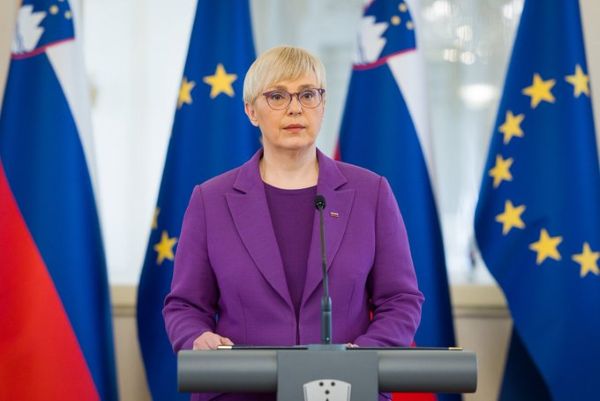
On 25 April, the president addressed the press about her consultations with party leaders, revealing that no candidate secured a majority in the 90-seat National Assembly. She chose not to nominate a candidate for a minority government.
In the second round of voting, parliamentary groups or ten MPs can propose a prime minister. If there’s no election in this round, a third round may be held with a simple majority needed to win. The elected prime minister must propose a cabinet within 15 days.
In her statement, President Pirc Musar emphasised that change requires action, not silence. She said, “I cannot propose a candidate for prime minister,“ and highlighted that politics is about serving the people and making fair compromises. She criticised the current political climate, stating that many have lost trust due to a disconnect between campaign promises and post-election actions. She warned against a “partytocracy“ where party loyalty overshadows integrity and cooperation.
The GS party expressed concern over recent events, urging clarity on who in the National Assembly supports Janez Janša. They emphasised the importance of honouring pre-election promises.
Outgoing Prime Minister Robert Golob informed the president that he will not attempt to form a government under the current conditions.
Centre-left parties, including the Social Democrats (6.71%, 6 seats), have supported the President’s decision and urged the centre-right to clarify their plans. They criticised actions that were misleading and harmed public trust. The Left party, Levica (5.69%, 5 seats), also backed the decision, accusing the right of pushing harmful legislation while claiming not to coordinate with it. They warned this approach would lead to broken promises and benefit only certain interests.
The right-wing SDS and NSi coalition of minor parties didn’t comment on the president’s decision. Janez Janša claims the party has not yet decided to form a government but expects to gather the necessary 46 parliamentary votes. He stated that initial steps towards government formation will be taken after their proposal to reduce the number of ministries is discussed in parliament next week. If approved, the SDS will draft a coalition agreement to send to supporting parties.
Reports suggest Janša could form a government with the conservative New Slovenia (NSi) and the Democrats, led by his former aide Anže Logar, who holds a combined total of 43 seats. The anti-vaccination populist party Resni.ca, with 5 seats, is expected to act as “constructive opposition.”
Foreign interference
Under Prime Minister Robert Golob, Slovenia recognised an independent Palestinian state and imposed an arms embargo on Israel during the Gaza bombing campaign. Concerns arose over former Prime Minister Janez Janša’s meetings with the Israeli firm Black Cube, which he acknowledged but denied any wrongdoing.
If parliamentary consultations fail, early elections may be called. The president stressed the need for a culture of dialogue, stating that its absence affects all aspects of life.
