
On 23 April, the JURI legal affairs committee of the European Parliament voted to recommend suspending the immunity of four Polish Members of the European Parliament (MEPs). Daniel Obajtek and Patryk Jaki represent the nationalist Law and Justice Party (PiS), which is part of the European Conservatives and Reformists (ECR) Group. The other two members, Grzegorz Braun and Tomasz Buczek, are affiliated with a right-wing extremist party and a far-right party, respectively.
To lift the immunity, the proposals must be considered by the full European Parliament in a plenary session. Talking to TVP Info, Michał Wawrykiewicz (EPP, Poland), a member of the committee, stated that “all immunities were clearly recommended to be lifted by a significant majority of votes.” He emphasised that the decision is based on criminal allegations and is free of political motivations, as these matters will be addressed by either the prosecutor’s office or private prosecution.
Krzysztof Śmiszek (S&D, Poland), also a member of the JURI committee and Vice-Chairman of the Party of European Socialists, expressed confidence in the committee’s decision. He noted, “The entire parliament was clearly recommended to waive these immunities by a majority vote. A subsequent vote is expected next week at the European Parliament plenary session in Strasbourg, leading to the case returning to the Polish prosecutor’s office and the Polish courts.”
Antisemitism and bullying
Grzegorz Braun, a politician known for his antisemitic views and pro-Kremlin stance, has faced numerous allegations related to bullying, racially charged behaviour, and hate speech. The European Parliament has formally revoked his immunity in March, allowing Polish authorities to proceed with legal action against him on multiple charges, including Holocaust denial. This latest decision marks the third time Braun’s parliamentary immunity has been waived.
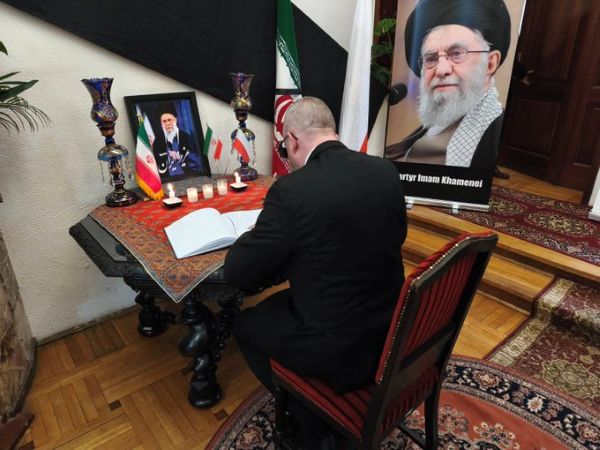
Recently, he was reported to have obstructed traffic during a ceremony in Jedwabne that commemorated the massacre of Polish Jews, an act deemed inappropriate for parliamentary discourse or political dialogue. Braun is currently facing multiple charges in Poland related to these conduct issues. His antisemitic beliefs have also led him to visit the Iranian embassy in Warsaw to express condolences for the death of Supreme Leader Ali Khamenei, who was killed during the first day of the US-Israeli bombing of Tehran.
Since 2019, Braun has served as chairman of the Confederation of the Polish Crown (KKP), which is recognised as the most extremist of the Polish far-right parties. After being rejected by other far-right groups, KKP’s sole MEP serves as a Non-attached member in the European Parliament.
Additionally, MEP Tomasz Buczek, who was elected as part of the Confederation of Freedom and Independence far-right coalition, faces accusations of violating the bodily integrity of a participant at a demonstration. Buczek is a member of the National Movement (Ruch Narodowy), one of the two factions within the Confederation, which is a member of the Patriots for Europe (PfE) Group. This party is often described as neofascist and ultra-nationalist, with its leaders classifying homosexuality as “a disease.” Conversely, the other faction within the Confederation, the New Hope party, is known for its pro-Russian sentiments. At the same time, the National Movement takes a stance critical of Russia, considering both Russia and Belarus significant threats to Poland’s sovereignty.
PiS MEPs
The request to lift the immunity of two Law and Justice Party (PiS) lawmakers pertains to two separate cases.
The first case involves Daniel Obajtek, in which the issue is the restriction of work freedom and the prohibition on distributing a potentially controversial, yet legally operating, weekly publication in Poland. The second case involves Patryk Jaki, who faces a private indictment brought by a judge. He is accused of making inappropriate remarks about a judge in Poland.
Any request to waive a MEP’s immunity is submitted to the European Parliament’s Legal Affairs Committee, which prepares a detailed report on the matter. Following this, the request is put to a vote during the plenary session of the European Parliament, where a simple majority is required to waive immunity. Lifting an MEP’s immunity does not imply a finding of guilt; rather, it allows national judicial authorities to carry out investigations or trials as deemed necessary.
