
The European Union has officially approved a €90 billion loan package to support Ukraine’s economic and military needs over the next two years. This decision follows the restoration of oil flows through the Druzhba pipeline, which traverses Ukraine and connects Hungary and Slovakia, whose damage, due to a Russian drone attack, caused complicated political negotiations. In conjunction with this, the EU has also implemented a new set of sanctions against Russia in response to its ongoing aggression towards Ukraine.
These sanctions were initially prepared earlier this year and were intended for announcement in February to mark the fourth anniversary of the conflict. However, Hungary and Slovakia had previously opposed this initiative. A dispute arose following the cessation of Russian oil deliveries to these two EU member states in January. Both countries have now confirmed the resumption of oil deliveries.
Ukraine urgently requires this loan package to stabilise its war-affected economy and bolster its defence capabilities against Russian forces. Hungary has faced criticism from fellow EU members for withdrawing from an agreement reached in December to provide financial support. The disbursement of loans is expected to take place in the coming weeks and months.
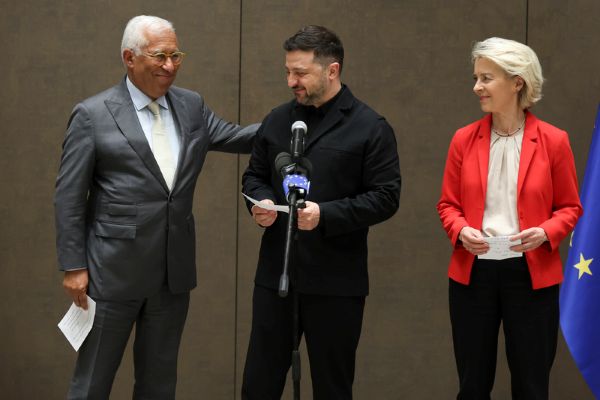
European Council President António Costa remarked, “Promised, delivered, implemented,” in a social media post. During his arrival to preside over a summit of EU leaders in Cyprus, Costa emphasised the importance of progressing Ukraine’s aspirations to join the European Union. Alongside him, Ukrainian President Volodymyr Zelenskyy conveyed his appreciation for the support from European partners, stating, “We will work diligently to ensure the timely delivery of these funds. This assistance will significantly strengthen our military capabilities and enhance our production efforts.”
Slovak Prime Minister Robert Fico called the resumption of Russian oil flow to Hungary and Slovakia through the Druzhba pipeline “good news” and expressed hope for improved relations between Ukraine and the European Union.
Hungarian energy group MOL confirmed it received crude oil at the Fényeslitke and Budkovce pumping stations, marking the end of a nearly three-month hiatus in deliveries. While Ukraine and most European allies oppose Russian oil imports due to their role in funding the ongoing conflict, Hungary and Slovakia remain reliant on Russian energy.
Outgoing Hungarian Prime Minister Viktor Orbán alleged that Ukraine had purposely delayed repairs to the pipeline, a claim Zelenskyy denied. Fico expressed doubt about any damage to the pipeline, suggesting that it was being used in the current geopolitical struggle.
The “tyranny” of veto
The recent conflict has raised important questions about decision-making within the EU, which often struggles with national interests when unanimity is required. Many officials have recently called for more majority voting. The 27-nation bloc initially planned to use frozen Russian assets as collateral for a loan, but Belgium blocked the plan because it holds most of those assets.
In December, the Czech Republic, Hungary, and Slovakia agreed not to obstruct borrowing on international markets, provided they did not have to participate. However, Hungarian Prime Minister Viktor Orbán angered the other member states by withdrawing from this agreement as he faced a tough election on 12 April, which he lost by a large margin.
More sanctions against Russia
Since February, the European Union has been actively pursuing a comprehensive set of sanctions against Russia aimed at undermining its military operations. However, progress on these measures has been hindered by Hungary and Slovakia due to a dispute over oil interests. Recent sanctions have targeted over 40 vessels believed to be part of Russia’s shadow fleet engaged in the illicit transportation of oil.
Oil revenue plays a vital role in sustaining Russia’s economy, facilitating significant funding for the armed forces while minimising inflationary pressures on the general population and preventing a potential currency crisis.
In addition to shipping sanctions, several Russian banks have been affected, and a ban has been imposed prohibiting European entities from using Russian cryptocurrency. Furthermore, asset freezes have been imposed on approximately 60 additional entities, which encompass various companies, government agencies, banks, and other organisations. This action contributes to the expanding list of more than 2,600 Russian officials and entities that are currently under sanctions, including President Vladimir Putin, his political affiliates, prominent oligarchs, and numerous lawmakers.
This article used information from The Associated Press.
