
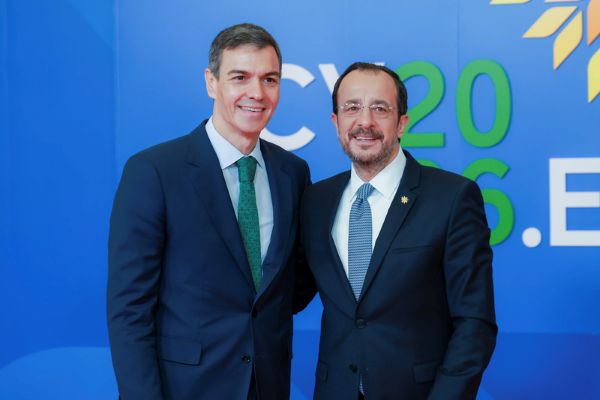
On Friday, Spanish Prime Minister Pedro Sánchez expressed reluctance to engage in a confrontation with the United States over reports that the Pentagon is considering disciplinary measures against NATO members that do not support American operations in the Iran conflict.
Spain is among those reportedly under scrutiny, as it has declined to permit US forces involved in the conflict to utilise its military bases or airspace. The Spanish government contends that actions taken by the US and Israel in the Iran war contravene international law. Similarly, France and the United Kingdom have also refrained from granting unrestricted access to their territories for US military operations.
According to an unidentified US official, citing a US Defence Department email, the Pentagon is evaluating the potential suspension of Spain from NATO. However, the Associated Press has not been able to verify the contents of the email and is awaiting a response from the Pentagon.
Prime Minister Sánchez remarked, “We do not operate based on emails; we rely on official documents and the positions articulated by the government of the United States.” He further clarified, “The position of the government of Spain is unequivocal: we seek absolute collaboration with our allies, but always within the confines of international legality.”
The Trump administration has a history of proposing plans and ideas that often remain unimplemented and do not become formal policy. Additionally, the email mentioned the possibility of re-evaluating US support for the United Kingdom’s claim to the Falkland Islands, also referred to as Islas Malvinas, located near Argentina. Dave Pares, a spokesperson for Prime Minister Keir Starmer, reaffirmed that the U.K.’s stance on the islands is longstanding and remains unchanged: sovereignty lies with the United Kingdom, and the islanders’ right to self-determination is of utmost importance. He also emphasised, “The Falkland Islands have previously voted overwhelmingly in favour of remaining a U.K. overseas territory.”
NATO and the war in Iran
NATO operates on a consensus-based model, requiring agreement from all 32 member countries before any collective action can be taken. The founding treaty does not provide for the suspension or expulsion of any member; however, a nation may withdraw from NATO one year after notifying its fellow allies. As an organisation, NATO does not have a direct role in the ongoing conflict in Iran, aside from its commitment to defend its own territory.
In response to inquiries, NATO headquarters stated, “NATO’s Founding Treaty does not foresee any provision for suspension of NATO membership or expulsion.”
US President Donald Trump has expressed concerns about perceived support from certain NATO allies for American efforts in the Iran conflict and the need for assistance in securing the Strait of Hormuz, a vital trade corridor. He has raised questions about the value of US membership within the military alliance. In contrast, EU foreign policy chief Kaja Kallas has expressed confusion about the US criticisms, noting that the United Kingdom and France are at the forefront of initiatives to ensure trade security in the strait following the resolution of the conflict.
“When we have had contacts with the American counterparts, then actually their asks for us have been exactly what we are able to offer after the cessation of hostilities,” she said. “Demining, escorting of ships, all of this that we have been discussing.”
But the United States has “longstanding arrangements and agreements with European allies on overflight, on basing” that should be respected, NATO Secretary-General Mark Rutte has said, in implicit criticism of some allies, including Spain and France.
Spain has restricted US military operations related to the Iran war, while US warplanes have flown over other NATO allies’ airspace and used their bases. Trump has threatened to cut trade with Spain over its refusal to allow the use of its bases. Furthermore, Spain has disappointed its allies by failing to meet expected defence spending levels.
EU’s security
As the US commitment to NATO and Europe’s security has weakened under Trump, EU leaders are discussing how to use European laws to support one another in case of an attack. Cypriot President Nikos Christodoulides, whose country holds the bloc’s presidency until July, announced that they have tasked the European Commission with drafting a response plan under Article 42.7 of the EU treaties, which has been invoked only once, by France after the Paris attacks in 2015. Next month, EU envoys and ministers will conduct “table-top exercises” to explore how this article can be applied, utilising the bloc’s military resources and other capabilities, such as trade and visa policies.
This article used information from The Associated Press.
