
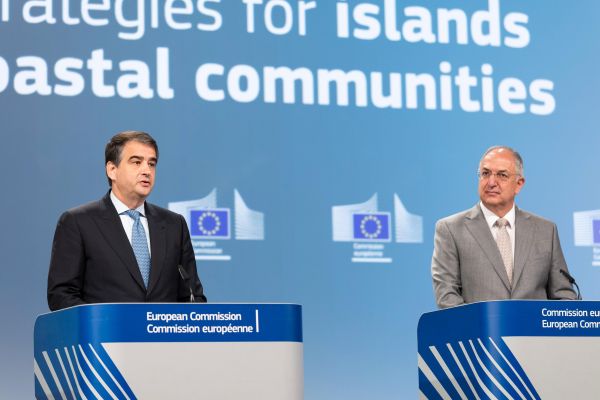
The European Commission created its first comprehensive strategy for island and coastal communities, in a bid to improve the lives and economies of a crucial but often neglected part of Europe.
According to the Commission, more than 100 million Europeans live between islands and the coast. To address the needs of such diverse and large communities, the Commission developed two distinct, tailored strategies that overlap in shared areas.
“By improving transport, boosting green energy, strengthening local economies, and addressing demographic challenges, we’ll turn obstacles into opportunities, making these territories key to a sustainable, competitive Europe,” said Executive Vice-President Raffaele Fitto.
For islands, the Commission will move from four main pillars of economic development, energy security, social and demographic challenges, and security readiness. The Commission wants to boost local economies by fostering stronger, more resilient businesses and by strengthening connectivity and digitalisation, which are often problems that isolate locals and make it harder for them to engage with the rest of the world. In addition, greater protection against climate change-related threats through projects to accelerate the adoption of renewable energy and decarbonisation, plus better responses to natural disasters and other maritime risks.
Coastal communities will have similar attention from the Commission, with a stronger focus on diversifying local economies and strengthening responses to broader environmental issues. To this end, the Commission wants to involve the European Investment Bank and the EU Missions on Adaptation to Climate Change and Restore Our Ocean and Waters to help map potential investment opportunities and conduct risk assessments. Speaking about coastal communities, Commissioner for Fisheries and Oceans Costas Kadis said, “Our Coastal Strategy secures their future: strengthening the blue economy, climate-proofing infrastructure, and protecting heritage.”
