
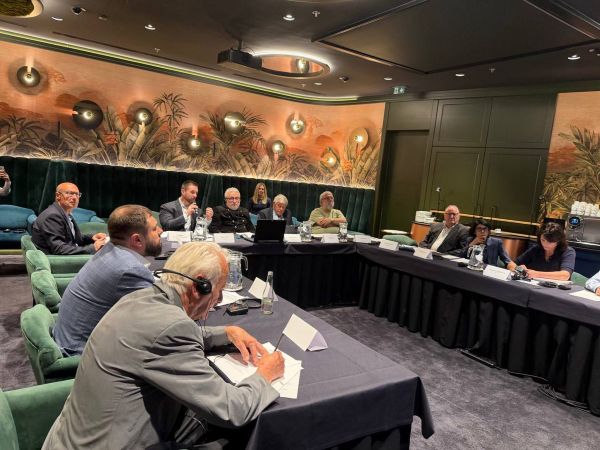
Bratislava hosted the “Energy Sovereignty of New Europe” conference, bringing together Members of the European Parliament, national lawmakers, and experts in energy and industrial policy. The central focus of the discussions was the impact of EU energy regulation on the European economy, rising energy prices, and the competitiveness of European industry.
One of the key organisers of the event was Slovak Member of the European Parliament Milan Uhrík. The conference formed part of the broader “For Energy Sovereignty!” initiative, under which an international expert-parliamentary group is being established to address energy security and the reform of EU energy policy.
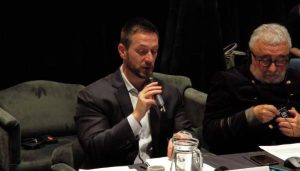
[One of the key organisers of the event was Slovak Member of the European Parliament Milan Uhrík]
“The current energy policy of the European Union is in a very poor state and is destroying Europe,” Uhrík said while presenting a critical assessment of the European Commission’s energy agenda. According to him, European industry is facing record electricity prices, while more and more companies are relocating production outside the EU.
“Companies are no longer coming to the European Union — they are leaving it,” the Slovak MEP stated, stressing that energy costs in Europe now significantly exceed those in both the United States and China.
Among the participants were Steffen Kotré, the Bundestag’s official spokesperson on energy policy, Greek MEP Emmanouil Fragkos, American geopolitical strategist and Donald Trump adviser Guido (“George”) Lombardi, and other political and industry representatives.
In his address, Kotré supported the initiative to establish an international expert group and argued for greater autonomy for European states in shaping their energy policies.
“European countries must have energy independence. We should not become dependent on individual sources of energy,” the German lawmaker said.
According to Kotré, Europe should retain the sovereign right to determine its own energy mix.
“In Germany, we want to achieve energy sovereignty — a system in which we ourselves decide which energy sources to use, and no one dictates to us what is permitted and what is forbidden,” he stressed.
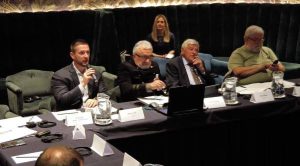
Emmanouil Fragkos, for his part, focused on the social dimension of the energy crisis. According to the Greek MEP, energy policy has long ceased to be an abstract geopolitical debate for millions of Europeans.
“This is about whether families can heat their homes, whether small businesses can survive, and whether European industry can remain competitive,” Fragkos said.
He also called for a more pragmatic approach to European energy policy
“Peace is not weakness. Sometimes it is an economic necessity,” Fragkos noted, arguing that de-escalation and long-term stability are essential conditions for Europe’s energy security.
During the conference, participants discussed the consequences of EU sanctions policy, Europe’s growing dependence on imported technologies for the green transition, and the renewed interest in nuclear power as a stable source of industrial energy.
At the conclusion of the meeting, participants prepared a declaration proposing the establishment of a permanent expert group under the banner “For Energy Sovereignty!”. The body is expected to analyse existing EU energy regulation and prepare recommendations for parliamentary initiatives at both the European and national levels.
