
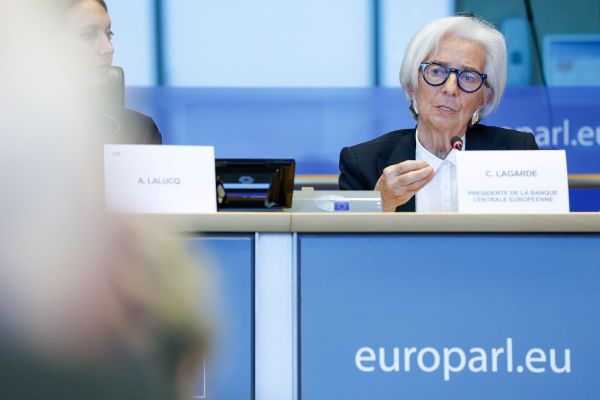
On Thursday, Members of the European Parliament (MEPs) from the Economic and Monetary Affairs Committee convened with European Central Bank (ECB) President Christine Lagarde for their inaugural quarterly meeting of 2026. In light of the prevailing uncertainties in both the international political and economic arenas, numerous MEPs seized the opportunity to seek insights from Ms Lagarde on the ECB’s strategy for navigating current challenges.
In her opening remarks, Ms Lagarde asserted that inflation has been effectively managed, attributing this achievement to the ECB’s decisive policy responses. However, she acknowledged that public perception still reflects the belief that prices are rising faster than they actually are, with significant implications for economic decision-making and institutional trust.
Ms Lagarde provided an overview of the euro area economy, clarifying that the ECB would not commit to a defined interest rate trajectory at this juncture. MEPs inquired about the potential influence of US policies and the relative weakness of the US dollar on inflation within Europe, as well as the extent to which US monetary policy might exert pressure on euro area monetary policy.
Additionally, questions were raised regarding the possible impact of artificial intelligence on inflation trends. MEPs also explored how current global instability could be reflected in monetary policy decisions aimed at promoting stability and cultivating public trust.
The discussion included inquiries concerning the digital euro, with specific emphasis on the necessary infrastructure for its implementation and the ECB’s position on its distribution through non-European channels. The importance of accurately interpreting public support for the digital euro was also highlighted.
Furthermore, MEPs addressed Ms Lagarde regarding her personal situation, including speculation about her potential early departure from the ECB presidency and her remuneration from the Bank of International Settlements. Other topics discussed included disparities in economic growth among member states, the role of housing in inflation calculations, the implications of the Mercosur trade agreement and similar international agreements for the European economy, and strategies for achieving market integration to mitigate fragmentation.
