
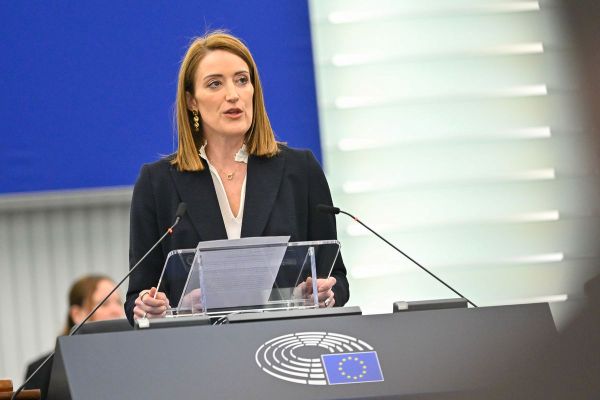
On Wednesday, Members of the European Parliament (MEPs) approved a revised version of the “Framework Agreement” that governs the relationship between the European Parliament and the European Commission. This updated text builds on the 2010 agreement and incorporates over a decade’s worth of institutional practices, reflecting the evolution of Parliament’s role during that time.
“Europe works best when our institutions pull in the same direction. The European Parliament and the European Commission are natural allies in delivering for our citizens. This agreement strengthens our partnership which is built on trust, transparency and democratic accountability. It will improve the effectiveness and credibility of our actions and ultimately serve all Europeans,” explained President Roberta Metsola.
The Parliament-Commission framework agreement sets out rules for cooperation in legislative, budgetary, and political matters. Initiated in October 2024 by Presidents Metsola and Ursula von der Leyen, this revision process follows the Treaty of Lisbon, which recognises legally binding interinstitutional agreements between EU institutions. These agreements establish “joint rules of procedure” to enhance cooperation.
The revised agreement significantly enhances Parliament’s democratic functions by ensuring a more comprehensive, timely, and detailed flow of information from the Commission. It strengthens parliamentary oversight of both legislative and international processes while providing greater clarity regarding the rules for urgent procedures. Furthermore, the agreement enhances the Commission’s political accountability by requiring the presence of responsible Commissioners during plenary and committee debates. It also reinforces Parliament’s right to initiate changes, including requests to amend or repeal existing legislation.
“This agreement is a success for the European Parliament. The key now is that Parliament makes full use of the rights it has. This means using its de facto right of initiative, particularly to request the amendment or repeal of existing legislation. It also means asking the Commission to justify when it relies on a legal basis that leaves Parliament aside. The agreement does not fix the shortcomings of the Treaties, but it is an important step forward. Now Parliament must use its rights wisely and consistently,” commented rapporteur and co-negotiator Sven Simon (EPP, DE).
This agreement received strong support, with 446 votes in favour, 100 against, and 72 abstentions. Additional information on key improvements is available in the press releases detailing the provisional agreement reached in September 2025 and the ensuing committee vote in February 2026. A signing ceremony with Presidents Roberta Metsola and Ursula von der Leyen is planned for the March II plenary session on March 25-26, which will allow the revised framework agreement to come into effect.
