
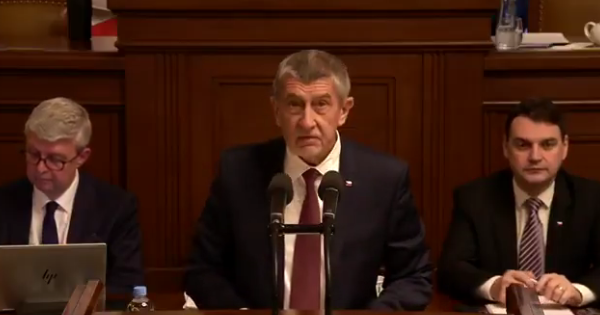
The newly established coalition government of the Czech Republic, led by Prime Minister Andrej Babiš, who aligns with far-right Marine Le Pen, supports the Kremlin and US President Donald Trump, is currently facing a no-confidence vote in Parliament. This situation arises from a dispute involving the country’s president.
Opposition parties that initiated the vote are supporting President Petr Pavel, who has accused Foreign Minister Petr Macinka of engaging in blackmail. The controversy centres around Macinka’s insistence that the president appoint a minister from the far-right Motorists for Themselves party, which is a member of the Patriots for Europe (PfE) group in the European Parliament. Macinka is the leader of the Motorists party.
President Pavel contends that Filip Turek, whom Macinka proposed for the role of environment minister, is unfit for the position due to discriminatory posts identified on his Facebook page, brought to light by a daily newspaper last year. Although Turek has apologised for certain content, he denies having posted other material.
In response, Macinka has accused President Pavel of constitutional violations and threatened to pursue actions against him, including attempts to prevent Pavel from representing the country at an upcoming NATO summit if Turek is not appointed.
In a show of public support, tens of thousands of citizens rallied in Prague and other cities in favour of President Pavel. Prime Minister Babiš has rebuffed opposition calls to dismiss Macinka, who remains unapologetic. The government maintains a majority in Parliament, which is expected to be sufficient to withstand the no-confidence vote.
A meeting between the president and the prime minister is scheduled for Wednesday to address these issues. After a successful election in October, Babiš’s ANO movement formed a coalition government on 15 December with the right-wing extremist Freedom and Direct Democracy party and the Motorists for Themselves.
The coalition government denies support for Ukraine and rejects several key EU policies. In contrast, President Pavel and the opposition remain firm in their support for Ukraine in its conflict with Russia.
This article used information from The Associated Press.
