
Europe cannot build a common defence industry without a common defence policy
Four years after Russia’s full-scale invasion of Ukraine, European security remains under unprecedented pressure. The war has exposed not only the fragility of the continent’s security architecture but also the limitations of Europe’s defence-industrial model. While defence spending is rising across the European Union, progress towards genuine military integration remains slow and fragmented.
The debate on European defence is often presented as a question of budgets, industrial competitiveness or technological innovation. In reality, the central challenge is political. Europe cannot build an effective common defence industry without first developing the institutions and mechanisms of a genuine European Defence Union.
The political lesson of FCAS
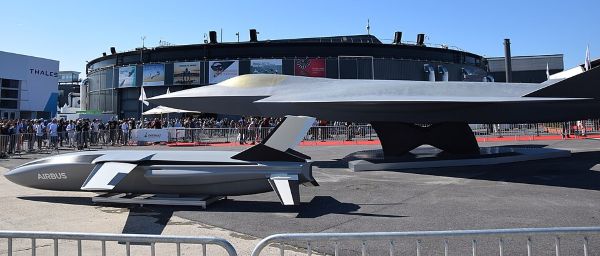
The recent collapse of the Franco-German-Spanish Future Combat Air System (FCAS) provides a revealing example. Officially, the programme stalled because of disagreements between Dassault Aviation and Airbus over workshare, intellectual property rights and access to sensitive technologies. In reality, the industrial deadlock reflected deeper political divergences between the participating states.
France has traditionally pursued a doctrine of strategic and industrial sovereignty, seeking autonomous control over its military capabilities, from nuclear deterrence to combat aviation and defence production. Germany, by contrast, has generally favoured greater interoperability within allied frameworks and has adopted different operational priorities. The conflict between Dassault and Airbus, therefore, represented not simply a corporate dispute but the manifestation of competing national strategic cultures.
The inability of the participating governments to impose a compromise demonstrates a broader structural problem. National governments and national defence industries remain closely intertwined and are therefore ill-equipped to drive genuine European military integration. As long as defence procurement is primarily shaped by national priorities, Europe will continue to duplicate efforts, fragment resources, and weaken its collective capabilities.
The consequences are already visible. Following the FCAS crisis, German and Spanish industrial actors began exploring an alternative sixth-generation fighter concept outside the original framework. At the same time, the Global Combat Air Programme (GCAP), involving Italy, the United Kingdom and Japan, continues to move forward. Europe now risks investing in multiple competing next-generation combat aircraft projects where strategic logic would suggest the development of a single platform.
The FCAS experience therefore illustrates a broader reality: industrial integration cannot succeed where political integration remains incomplete.
Europe’s fragmentation problem
This fragmentation comes at a considerable cost. The twenty-seven EU member states collectively operate around 130 major land, air and naval weapons systems, compared to roughly 30 in the United States. As a result, Europe spends roughly one-third of US defence expenditure while generating only a fraction of comparable military capability. The problem is therefore not only one of spending levels but also of efficiency and coordination.
Addressing this challenge requires moving beyond voluntary cooperation towards a genuine European Defence Union. The European Commission and the European Defence Agency should play a significantly stronger role in determining capability requirements, coordinating procurement and directing European funding towards common projects. Access to EU defence financing should increasingly be linked to multinational programmes and common procurement.
The objective should not simply be cooperation among national industries but the gradual creation of a European defence market capable of producing common strategic assets. In the case of sixth-generation combat aircraft, European institutions should actively encourage the convergence of existing programmes rather than financing parallel and competing initiatives.
Achieving genuine strategic autonomy will also require member states to accept limited but meaningful centralisation of procurement authority for major defence systems. Industrial leadership should be allocated primarily on the basis of technological capability and operational effectiveness rather than political balancing among participating states.
Ultimately, successful common procurement depends on the existence of common armed forces capable of employing the systems being developed. For this reason, the creation of a European multinational force should become a strategic priority. The EU Rapid Deployment Capacity could serve as the nucleus of such a force, with EU-funded military equipment increasingly allocated to European rather than purely national formations.
From national procurement to European capability
Recent EU initiatives have not yet addressed this structural challenge. While national defence spending is increasing significantly, joint procurement remains stuck at around 20 per cent of total expenditure. More importantly, the incentives embedded in current European instruments remain insufficient to reverse decades of fragmentation.
The Security Action for Europe (SAFE) initiative is a case in point. Although it mobilises substantial financial resources, it largely supports national procurement decisions rather than creating strong incentives for genuinely European programmes. As a result, a significant share of additional European defence spending continues to flow to non-European suppliers. Between 2021 and 2024, US arms exports to Europe more than doubled, reflecting both Europe’s urgent security needs and the continuing weakness of its industrial integration.
A different approach is needed. Rather than primarily financing national purchases, European resources should increasingly be channelled through common instruments such as the European Defence Fund, the European Defence Agency and joint procurement mechanisms. Their objective should be to support large-scale multinational programmes capable of reducing duplication and creating genuine economies of scale. In the long term, Europe should seek the convergence of competing flagship projects, including in the field of next-generation combat aviation.
At the same time, defence industrial integration cannot succeed without a corresponding effort to develop common military capabilities. Strategic autonomy does not simply mean producing European weapons; it means possessing the capacity to employ them effectively. The first priority should therefore be the development of critical strategic enablers, including satellite communications, intelligence and surveillance systems, strategic airlift, missile defence, cyber defence capabilities, and secure military communications. These remain areas where Europe depends heavily on American support.
The European Union already possesses instruments that could contribute to this objective. Joint Undertakings could provide an effective framework bringing together the European Commission, Member States and private industry in the development of key strategic capabilities. Properly designed, such structures would help bridge the persistent gap between industrial policy and defence planning.
A new strategic reality for Europe
The geopolitical context makes these reforms increasingly urgent. The gradual reduction in American commitment to European security did not begin with the current administration, though recent developments have accelerated the trend. In reality, successive US administrations have encouraged Europeans to assume greater responsibility for their own defence.
This evolution is reflected even within NATO planning. Under NATO’s New Force Model, the first large-scale response to a conventional attack against a European ally would rely overwhelmingly on European forces. European countries are expected to generate the bulk of the 300,000 high-readiness troops required during the initial phases of a crisis. As American military resources become increasingly focused on the Indo-Pacific, Europe must be prepared to assume a far greater share of responsibility for territorial defence.
For this reason, Permanent Structured Cooperation (PESCO) should be used more ambitiously. Willing Member States could gradually transform the EU Rapid Deployment Capacity into a permanent multinational European force. Such a development would not start from scratch. Europe already possesses a range of multinational military formations and structures, including the Eurocorps, the Franco-German Brigade and various regional cooperation frameworks. What is missing is not military experience but political integration, common planning and an effective command-and-control structure operating at the European level and fully compatible with NATO.
A genuine European Defence Union will also require a European financing mechanism commensurate with its ambitions. The experience of the Recovery and Resilience Facility demonstrated that the Union can mobilise substantial common resources when confronted with a strategic challenge. Defence should be approached with the same level of urgency. The issuance of European Defence Bonds could provide the long-term funding necessary for strategic capabilities, joint procurement programmes, defence-industrial investments and critical infrastructure. Beyond their economic benefits, such instruments would signal a shared political commitment to European security and help transform defence from a collection of national policies into a truly common European project.
Towards a European Defence Union
Ultimately, the debate on European defence is not only about military capabilities. It is also about political sovereignty. Common defence, common industrial policy, common investment instruments and stronger political integration are mutually reinforcing dimensions of the same project. None can fully succeed without the others.
A Europe capable of protecting its citizens requires institutions capable of acting collectively. This does not require the immediate creation of a federal state. It does, however, require a federal logic in strategic sectors such as defence, industrial policy and security, with a core group of Member States willing to move beyond purely intergovernmental cooperation.
The lesson of FCAS is therefore broader than the future of a single weapons programme. As long as Europe attempts to build a common defence industry without a common defence framework, fragmentation will persist. If the European Union is serious about strategic autonomy, it must move decisively towards a European Defence Union capable of defining common priorities, procuring common capabilities, and ultimately providing common security.
Otherwise, Europe’s military weaknesses will continue to grow, public confidence in the Union’s capacity to provide security will further erode, and nationalist forces will increasingly exploit that perception of decline.

Theodoros Tsikas
Mr. Theodoros TSIKAS is a Political Scientist and International Relations Expert, Head of the Programme "Theory and Practice of International Relations" at the Institute of International Economic Relations (IDOS/IIER), Greece.
Ms. Marovita Nikolaidou is a Communications Specialist - Political Scientist, Communications Officer of the Greek Union for the Federation of Europe – EEnOE/ UEF Greece
