
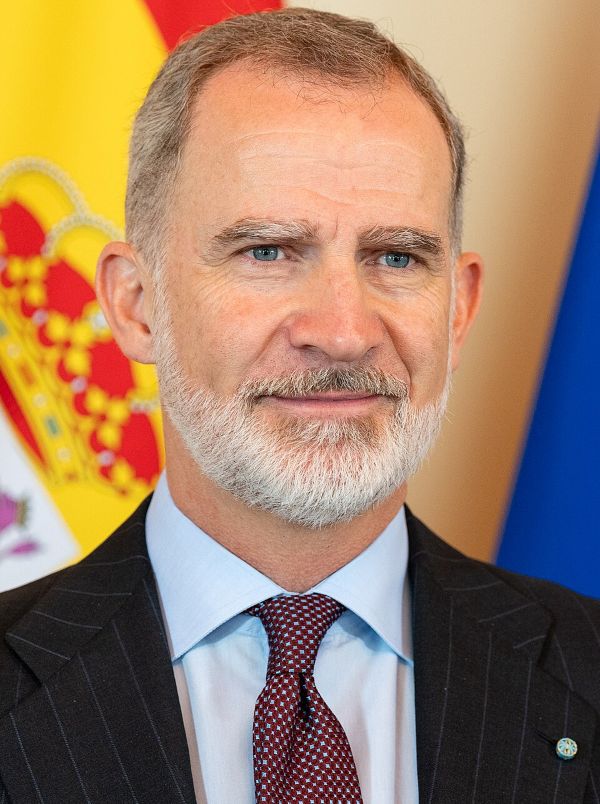
On Monday, Spain’s monarch, King Felipe VI, addressed the historical implications of the Spanish conquest of the Americas, acknowledging that the events involved “much abuse” and “ethical controversies.” His remarks aimed to foster a conciliatory atmosphere amid an ongoing diplomatic dispute between Spain and Mexico concerning colonial-era injustices.
While speaking with Mexico’s ambassador to Spain, Quirino Ordaz, during a visit to a museum exhibition in Madrid that highlighted the role of women in pre-Columbian Mexico, the King noted, “There are aspects of our past that, when examined through the lens of contemporary values, cannot make us feel proud. However, it is essential to evaluate these events within their historical context, utilising an objective and rigorous analysis rather than excessive moral presentism.”
This statement comes in the wake of years of diplomatic tensions, particularly following demands from the Mexican government for an official apology from Spain regarding the conquest from 1519 to 1521, which resulted in significant loss of life among the pre-Hispanic population. At its peak, colonial Spain governed one of the largest empires in history, spanning five continents. Mexico City became the focal point of Spanish colonial power in the Americas after the Spanish and their Indigenous allies defeated the Aztecs in 1521, establishing the city atop the ruins of the Aztec capital, Tenochtitlan.
In 2019, then-President of Mexico, Andrés Manuel López Obrador, formally requested that Spain “publicly and officially” recognise the historical abuses committed during the conquest, in a letter addressed to the Spanish king and Pope Francis. Spain declined this request, leading to strained relations between the two nations.
More recently, in 2024, the current Mexican President, Claudia Sheinbaum, chose not to invite King Felipe to her inauguration, citing the royal palace’s refusal to issue a formal apology—a move that Spanish Prime Minister Pedro Sánchez deemed “unacceptable.” Consequently, Spain did not send a representative to the inauguration ceremony.
Despite this backdrop, indications of potential reconciliation arose last fall when Spain’s Foreign Minister, José Manuel Albares, publicly acknowledged the “pain and injustice” experienced by Mexico’s Indigenous populations as a result of Spanish conquests. These remarks were delivered during the inauguration of the same exhibition attended by King Felipe VI, where he expressed that “there has been pain—pain and injustice toward the Indigenous peoples to whom this exhibition is dedicated.” President Sheinbaum recognised these comments as a significant first step towards addressing historical grievances, highlighting that this was the first occasion on which a Spanish governmental authority had expressed regret for past injustices.
It is important to note that King Felipe’s statements do not amount to a formal apology from the Spanish royal palace. President Sheinbaum indicated her intention to consider the implications of his remarks further.
This article used information from The Associated Press.
