
The Comprehensive Nuclear Test Ban Treaty Organisation (CTBO), the international organisation that monitors compliance with the non-proliferation treaty, is urging the great powers to halt any intention to resume testing and to push to ratify the treaty and make it official.
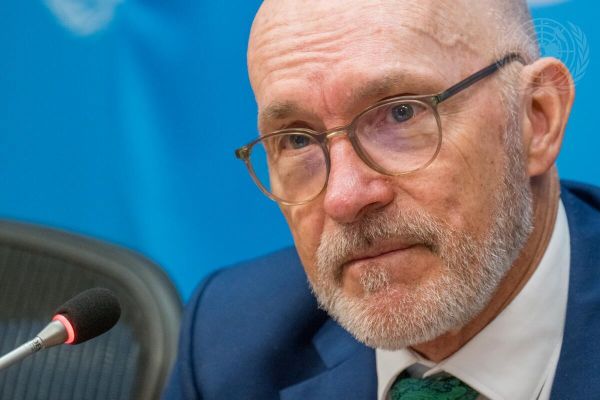
Its executive secretary, Robert Floyd, spoke to UN correspondents in a worrying tone, saying, “It’s a spiral that we do not want to see start, because it may never be able to be stopped.”
Already last year, the USA and Russia exchanged threatening messages about possibly restarting nuclear weapon tests. It would be the first major act to dismantle the Comprehensive Nuclear Test Ban Treaty (CTBT) since its 1996 inception. However, the treaty never entered into force, as it requires 44 specific countries to support it, but 9 have not done so.
Currently, the United States, China, Iran, Egypt and Israel have not ratified the treaty, while India, Pakistan and North Korea have not even signed it. Russia had previously signed and ratified, but in 2023, it decided to revoke its ratification. Ever since it was created, the CTBT has drastically lowered the number of tests for nuclear weapons, from more than 2,000 in the decades before to around a dozen in the thirty years since.
Floyd is hoping that China, Russia and the US could make a move together to ratify the treaty and put the brakes on an alarming narrative around nuclear weapons. At the end of 2025, US President Donald Trump accused China and Russia of conducting nuclear tests and said that he wants the US to answer accordingly with its own.
China and Russia always maintained that they adhere to the nuclear testing moratorium, but the US State Department has expressed doubts about their sincerity. Russia said it would resume testing only if the US started first.
Floyd tried to reassure the control mechanisms, saying that his organisation’s monitoring system can detect even the smallest testing and that no country could hope to conduct tests undetected.
