
For 16 years, Prime Minister Viktor Orbán imposed a regime that was marked by corruption, intimidation of political enemies and civil society, spreading nationalism, treating with racist behaviour refugees, immigrants and minorities – such as the Roma community, LGBTQ+ and homeless people – with racist behaviour, aligning with the global far-right and leading the way towards the demolition of the EU. This authoritarian regime partnered with Vladimir Putin and Donald Trump, targeting Ukraine and European democratic values. As a consequence, the electoral victory of the opposition, the pro-European Tisza party led by Péter Magyar, has global repercussions.
These elections were, in reality, a referendum on whether Hungarians wanted to remain in the European Union or embark on a perilous adventure under the commands of Russia, the Trump administration, or China.
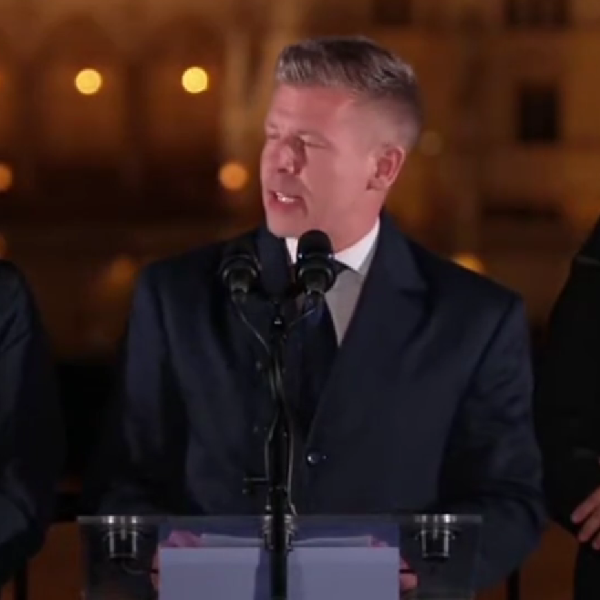
Speaking to tens of thousands of jubilant supporters at a victory party along the Danube River, the leader of Tisza said his voters had rewritten Hungarian history.
“Tonight, truth prevailed over lies. Today, we won because Hungarians didn’t ask what their homeland could do for them — they asked what they could do for their homeland. You found the answer. And you followed through,” he said.
However, leading figures of the regime spread dangerous disinformation through social media, warning about the use of force by the opposition.
“Reports about Tisza election fraud and aggressive Tisza actions are coming one after another,” Balázs Orbán, the Prime Minister’s political director and Fidesz campaign chief, wrote on social media yesterday.
He specified on his post on Facebook that Tisza’s followers try to bribe, get violent, go crazy at the voting booth, kill people with drones, and go out into the streets with guns.
Fortunately, Viktor Orbán quickly conceded defeat after what he called a ″painful″ election result.
“I congratulated the victorious party,″ Orbán told followers. “We are going to serve the Hungarian nation and our homeland from opposition.″
Péter Magyar, the election victor and a former insider in Orbán’s government, campaigned on a platform focused on combating corruption and addressing everyday issues such as health care and public transport. He has promised to restore Hungary’s relationships with the European Union and NATO, which have deteriorated under Orbán’s leadership. European leaders swiftly extended their congratulations to Magyar after his victory.
Foreign interference and intimidation
For a long time before the elections, foreign interference in Hungary steadily increased. Russian PR experts and an army of trolls spread disinformation and fear within a society that already experienced unprecedented poverty. Far-right leaders also openly supported Hungarian PM Viktor Orbán and his party, Fidesz. US Secretary Marco Rubio and US Vice President JD Vance visited Hungary to push Orbán toward victory.
However, Hungarian voters knew better what the regime did to Hungary: the economy is in ruins, thousands of Hungarians immigrated abroad, the media is under total control of Orbán, and there is vast corruption within the public sector. Moreover, a nation that still remembers the heroic 1956 uprising against the Soviet occupation of the country hardly digested this “unholy” alliance between Hungary and Russia, which the regime imposed.
Many revellers chanted “Ruszkik haza!” or “Russians go home!” — a phrase used widely during Hungary’s 1956 anti-Soviet revolution, and which had gained increasing currency amid Orbán’s drift toward Moscow.
More constructive European Council meetings?
For years, Orbán had used the veto right in an excessive manner, not only for Hungary’s interests. He frequently vetoed key decisions, including support for Ukraine, the EU sanctions on Russia, decisions concerning China, and decisions on breaches of the Rule of Law in Poland during the nationalist PiS government.
Now, the task of obstructing the EU’s functioning passes to the governments of Slovakia and the Czech Republic. However, whether their far-right prime ministers will be as aggressive as Orbán was is a serious question. The response depends on how strong these governments are in their countries, where they face strong, committed opponents to the EU and democratic values.
The European Union is closely monitoring how Hungary’s new leadership under Prime Minister Magyar will change the country’s approach to Ukraine. Orbán consistently obstructed EU efforts to support Ukraine in its fight against Russia’s full-scale invasion. Meanwhile, he fostered strong ties with Putin and maintained Hungary’s reliance on Russian energy imports.
Recent revelations have indicated that the foreign minister of Orbán’s government frequently shared details of EU discussions with Moscow. This has fueled accusations that Hungary was acting on Russia’s behalf within the European bloc.
It will also be significant to see whether the new prime minister will replace Hungary’s current EU Commissioner with someone more aligned with the EU’s objectives.
A blow for the far-right
The recent victory of Tisza is likely to have a significant impact on far-right movements across the globe, many of which view Orbán as an exemplar of how nationalist populism can be employed to wage culture wars and leverage state power to diminish opposition.
Supporters of US President Donald Trump‘s “Make America Great Again” movement regard Orbán’s administration and the Fidesz political party as prominent examples of conservative and anti-globalist governance.
The regime provided space for gatherings that brought together far-right leaders from the USA, Europe, and Latin America. An ambitious Orbán dreamed of becoming an international leader of the far-right movement.
His defeat may affect the global far-right movement and governments in different ways. In the Czech Republic and Slovakia, the far-right prime ministers may be less confident and more careful in their actions. This defeat may also affect the climate within the European Parliament, where the Patriots for Europe Group will remain with only one prime minister, the Czech Andrej Babiš.
The nationalist Law and Justice (PiS) party in Poland, which heavily invested in Orbán’s new victory, will also be affected. Péter Magyar said yesterday that his first visit as a Prime Minister will be to Poland. Additionally, many see the traditional Polish-Hungarian friendship restored.
It remains unclear if Magyar’s Tisza party will achieve a two-thirds majority in parliament, which would allow for significant legislative changes. With 93% of the votes counted, Tisza’s party has over 53% support, while Orbán’s Fidesz party has 37%. Tisza’s party is on track to win 94 of Hungary’s 106 voting districts.
