
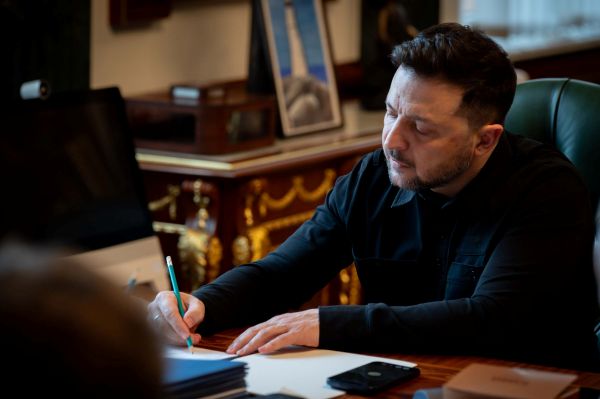
On Tuesday, Ukraine formally accused Israel of facilitating the importation of grain that it claims was unlawfully obtained by Russia from occupied territories. This accusation instigated a notable exchange between officials from both nations. Ukrainian President Volodymyr Zelenskyy reported that a vessel carrying this grain had arrived at an Israeli port and was preparing to unload, characterising the trade as illegal and warning of prospective sanctions against those involved.
The European Union has also notified Israel that it is prepared to impose sanctions on individuals and entities that support the trade of Ukrainian grain reportedly seized by Russia from occupied areas. Israel has asserted that the vessel has not yet entered the port and has not submitted the requisite documentation; however, the marine tracking website MarineTraffic.com indicates that the ship has been present in Haifa for several days.
President Zelenskyy remarked on X, “In any normal country, purchasing stolen goods is an act that entails legal liability,” adding that Ukraine’s intelligence services are preparing to impose sanctions on companies and individuals profiting from these shipments. He further stated, “We will also coordinate with European partners to ensure that relevant individuals are incorporated into European sanctions regimes.”
In response, Israel’s Foreign Minister Gideon Saar announced that the country’s tax authority has initiated an investigation regarding the ship expected to dock at Haifa port. Minister Saar characterised President Zelenskyy’s remarks as “Twitter diplomacy” and indicated that Ukraine had not provided sufficient information or requested legal assistance. Heorhii Tykhyi, a spokesman for Ukraine’s Foreign Ministry, emphasised that Kyiv had previously informed Israeli authorities about the vessels in question. He noted that more than two ships had arrived in Israel carrying agricultural products that Ukraine alleges were illegally taken by Russia from its occupied territories.
The Ukrainian Foreign Ministry has summoned Israel’s ambassador, Michael Brodsky, and conveyed a formal note of protest concerning the ongoing flow of such shipments. The ministry has established the origin of the grain and highlighted the various methods of concealment used, including ship-to-ship transfers in the Black Sea. Despite this knowledge, the cargo continues to arrive at Israeli ports and enter commercial circulation. The ministry has accused Israel of failing to respond adequately to formal requests to detain the vessels and their cargo.
Kyiv has characterised the issue as systemic rather than isolated and has urged Israel to cease imports involving what it asserts are stolen Ukrainian grain, cautioning that this situation risks undermining bilateral relations.
This article used information from The Associated Press.
