
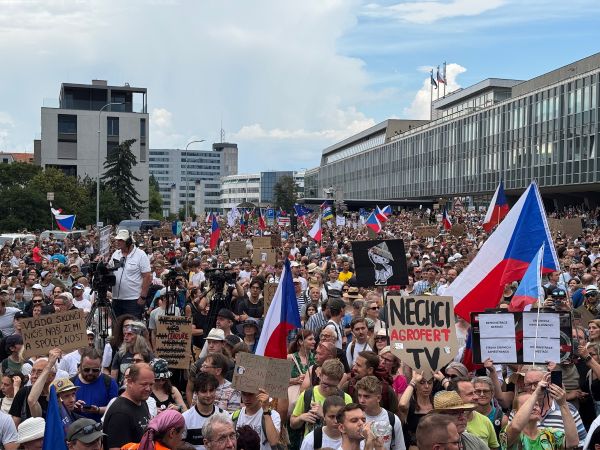
On Sunday, thousands of citizens in Prague gathered to express their opposition to a proposed government initiative to restructure funding for public broadcasters. This initiative, spearheaded by far-right Prime Minister Andrej Babiš, has raised concerns about a potential threat to media independence. The protest took place in front of the Czech public television offices, as supporters of the media rallied ahead of a planned warning strike by staff members scheduled for the following day. This event follows a series of recent demonstrations in both regional capitals and the capital city.
The plan, which received government approval last week, would shift the financing of public radio and television from fees paid by individuals, households, and businesses to state budget funding, effective next year. Critics of this proposal argue that it could facilitate greater government control over the media, drawing parallels to similar actions taken by far-right administrations in Slovakia and Hungary.
Mikuláš Minář, a prominent organiser from the Million Moments for Democracy group, emphasised, “The media do not belong to politicians; they belong to the public, and we will not permit their independence to be compromised.” The Babiš administration has a documented history of contentious interactions with the public and mainstream media.
Moreover, the proposed funding structure could result in a reduction of approximately 15% in media funding compared to current levels, with no assurances of future funding stability. The leadership of public radio and television has indicated that such funding cuts could necessitate significant staff layoffs. In defence of the initiative, Prime Minister Babiš has suggested that media organisations must implement cost-saving measures. Additionally, his coalition’s agenda includes shifting away from supporting Ukraine in its conflict with Russia and rejecting certain key European Union policies.
This article used information from The Associated Press.
