
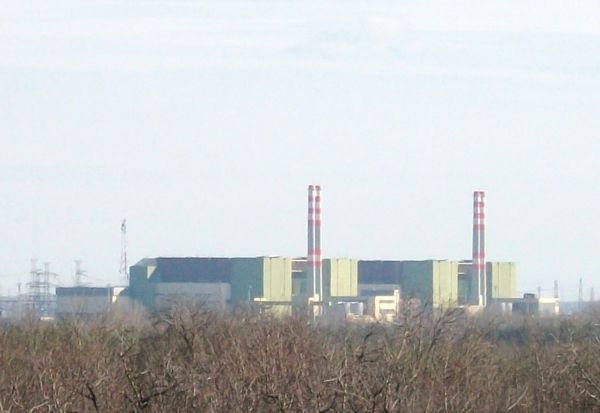
On Friday, 31 July, Hungarian Prime Minister Péter Magyar announced that the Paks nuclear power plant may remain closed for several weeks due to exceptionally low water levels in the Danube River, which are expected to impede safe operations. The Prime Minister indicated that while energy supplies are currently stable, the plant is generating only 960 megawatts, significantly below its maximum capacity of 2,000 megawatts.
According to recent reports, a complete shutdown of the plant could become unavoidable within the next 24 to 72 hours. The situation may reach a critical point by Monday, compelling the Prime Minister to urge large energy consumers to reduce their usage.
Currently, the plant’s four Russian reactors are functioning at less than 50% of their total capacity of 2 gigawatts. They are projected to cease operations entirely on Monday, 3 August, as the Danube’s water level is expected to decrease further.
Experts have warned that the water level may drop by as much as 144 centimetres, with little hope for improvement in the near future. Prime Minister Magyar cautioned that the Paks nuclear power plant could remain non-operational for several weeks due to these water level constraints, which pose safety concerns for reactor operations.
While Hungary has the capacity to meet its energy demands through imports, an expected heat wave could lead to a 20% increase in electricity consumption during peak hours, potentially placing additional strain on the energy system.
In response, Prime Minister Magyar has reiterated the importance of large industrial companies, including car and battery manufacturers, taking proactive measures to reduce their energy and water consumption in support of national energy security. Consequently, the Prime Minister has requested that major companies submit their plans for voluntary shutdowns to mitigate pressure on the electricity grid.
For instance, MOL is set to shut down some facilities in Hungary and reduce its electricity consumption by 40%. Additionally, Samsung SDI’s battery factory in Göd will implement a 50% reduction in water consumption and a 10% cut in electricity usage during peak hours.
The Paks nuclear power plant, which provides nearly half of Hungary’s electricity, relies on water from the Danube for cooling. Notably, in its 44-year history, the plant has never entirely ceased electricity generation. At the same time, individual units have undergone planned maintenance or experienced faults; at least one unit has always remained active, as highlighted by the weekly publication HVG on Friday.
