
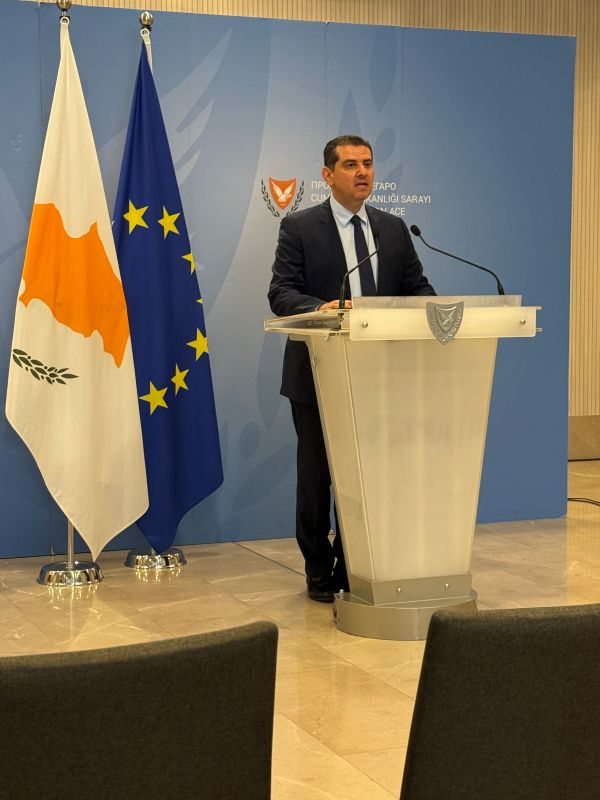
European consumers could start receiving natural gas from an undersea deposit off Cyprus as early as March 2028, according to energy minister Michael Damianos. He highlighted that the Eastern Mediterranean is becoming a key alternative energy source for Europe, driven by the need for new supplies amid the ongoing war in Ukraine and instability in the Middle East.
TotalEnergies of France and Italy’s Eni have decided to move forward with developing the Cronos natural gas field, which will be the first gas from the Eastern Mediterranean to reach European markets.
“It’s important for Europe at this time because of the war in Ukraine, because of this situation in the Middle East, that Cyprus is going to be an alternative source of gas,” Damianos told The Associated Press in an exclusive interview Friday.
The Eni-TotalEnergies consortium plans to begin construction of a pipeline from the Cronos natural gas field to Egypt’s Zohr deposit, 105 kilometres away, later this year, with completion expected in 18 months. Once operational, the gas will be sent to the Damietta processing facility on Egypt’s northern coast for liquefaction and transport to Europe.
Piping Cronos gas to Egypt is the most cost-effective option, estimated at around €1.73 billion, about half the cost of developing other Cypriot gas fields. The agreement states that over 3 trillion cubic feet (tcf) of gas will primarily be delivered to Europe, with a fifth reserved for Egypt’s domestic needs.
Damianos noted that while the reserve is small, its significance lies in starting production and gaining access to first gas. Cronos is one of six gas deposits found in Cyprus’ Exclusive Economic Zone. ExxonMobil and QatarEnergy, the licensees for the development of the Glaucus and Pegasus fields, expect gas production to begin by 2033.
“What we can say (is) that Exxon is the type of company that sticks by the timelines and sometimes delivers even earlier,” Damianos said.
ExxonMobil plans to expand its exploration off Cyprus and is expected to receive a new hydrocarbon license.
Another gas field, Aphrodite, was discovered nearly 15 years ago and holds about 5.6 trillion cubic feet of gas. A Chevron-led joint venture will decide on its development by summer 2027. A pipeline will connect the field to Egypt’s facilities, while an arbitrator is set to determine Israel’s share of the field next month.
A separate electricity project will connect Europe to Israel
Damianos praised the French investment company Meridiam for supporting the Great Seas Interconnector project, which will connect Europe’s power grid with Cyprus and, eventually, Israel. This project aims to end the energy isolation of both regions and contribute to the EU’s IMEC initiative, a new energy and trade route to the Gulf and India.
However, the project is facing delays due to cost issues, now exceeding the initial estimate of $2.2 billion. A forthcoming European Investment Bank report will clarify the costs, which is crucial for Cyprus, as consumers may need to cover up to 63% of construction costs, potentially driving up electricity prices. Efforts are underway to attract additional private investment and EU funding; so far, the EU has committed $760 million to the project.
“It’s a very important project for Europe because it connects Cyprus which is isolated to the European grid. And the idea is to then proceed and connect to Israel,” Damianos said.
This article used information from The Associated Press.
