
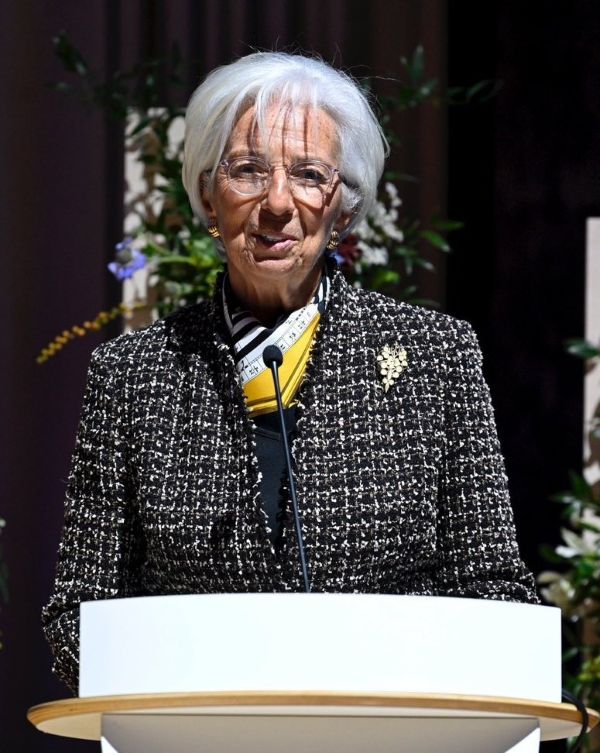
European Central Bank (ECB) President Christine Lagarde has officially announced her resignation, effective 7 February, nine months before her term ends. This decision allows European leaders to identify and appoint a successor ahead of next year’s presidential election in France.
Lagarde, 70, was initially set to serve an eight-year term that would have ended on 31 October 2027. Her resignation not only opens the door to selecting a successor but also raises the potential for complex political negotiations over replacements for two other senior officials set to depart next year.
The ECB president plays a crucial role in leading the bank’s governing council, which sets interest rates for the 21 countries that use the euro. These interest rates significantly influence borrowing costs across sectors, including residential property purchases and industrial investment. Furthermore, the ECB serves as the European Union’s principal authority in managing crises during periods of economic and financial instability.
“It has been a great pride and a huge privilege to serve this institution,” Lagarde said in a video message posted on X. “I think that I leave this institution with a sense of good work done and an ECB that is fit for the future.”
The announcement followed speculation about Christine Lagarde’s potential early departure. An early exit would let EU leaders select a successor while pro-EU French President Emmanuel Macron remains in office. This timeline would reduce the risk of far-right presidential candidate Marine Le Pen winning the election and influencing the choice of a successor.
“That she leaves early is no surprise and does not change the outlook for ECB policies,” said Holger Schmieding, chief economist at Berenberg Bank.
European Council President António Costa has announced that the ECB will begin selecting new officials today and proceed without delay. Chief economist Philip Lane‘s term ends on 31 May, and Isabel Schnabel, a member of the ECB’s executive board, will resign on 3 January to take a role at the International Monetary Fund.
European leaders are expected to negotiate how to allocate the three vacancies among member countries through a complex political process. Schmieding expects an agreement on all three positions before the upcoming summit on 17-18 December. Prominent candidates for Christine Lagarde’s position include Klaas Knot, former head of the Netherlands’ central bank, and Pablo Hernandez de Cos, general manager of the Bank for International Settlements (BIS), an international organisation for central banks.
Schmieding said the European Union is taking measures to mitigate potential risks from the 2027 French presidential election, particularly regarding the candidacy of the far-right politician Marine Le Pen. The EU will appoint Lagarde’s successor while the pro-European centrist Emmanuel Macron continues to lead from the Élysée Palace.
Lagarde, who previously led the International Monetary Fund, was appointed in 2011 to succeed Mario Draghi. A pivotal decision during her leadership came in 2020, when the ECB launched a major emergency stimulus program, deploying €1.35 trillion in bond purchases to safeguard credit availability amid the COVID-19 pandemic.
The ECB’s capacity for swift action—contrasting with the often lengthy negotiations among the 27 EU national governments—has positioned it as a key player in addressing Europe-wide crises, including the pandemic and the eurozone debt crisis between 2010 and 2012. Notably, Draghi’s 2012 assurance to “do whatever it takes to preserve the euro” calmed market turbulence and eased concerns about a potential eurozone breakup.
This article used information from The Associated Press.
