
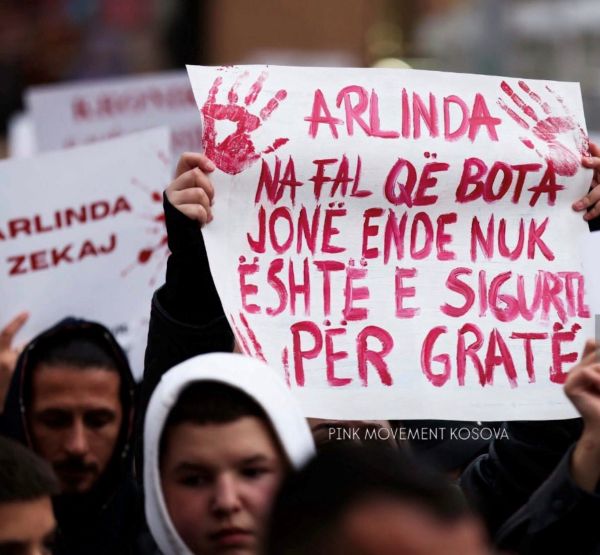
On Wednesday, demonstrators in Kosovo expressed their anger and concern regarding the pervasive violence against women in the country, which is characterised by a deeply entrenched patriarchal system. The protesters gathered in the capital, Pristina, where they splashed red paint on government buildings to signify the blood on the hands of authorities for their failure to prevent such violence.
This rally was prompted by the tragic death of Arlinda Zekaj, 49, who was killed by her brother-in-law near the western town of Peja on Sunday. Activists reported that Zekaj is the eighth victim of domestic violence in Kosovo this year.
The protesters carried banners with messages such as “Do we have to die to be taken seriously?” and “Men kill women; the state stays silent.” Additionally, some carried photos of the women who had lost their lives due to violence.
Despite having established several laws aimed at combating violence against women—including life sentences for murderers—activists contend that the implementation of these laws remains inconsistent and lacks coordination among the relevant institutions, including law enforcement, social services, prosecutors, and the judiciary. The issue is widespread throughout the Balkans, where male dominance is entrenched in societal traditions, a situation exacerbated by the wars of the 1990s and the ensuing political, economic, and social crises that continue to affect the region.
The public outcry following Zekaj’s death was amplified by the fact that she had reached out to authorities just three days prior, expressing concerns for her safety and indicating that she feared for her life. In her communication with the chief prosecutor’s office, she noted that officials were “shifting responsibility from one to another,” permitting the ongoing danger to her life.
Zekaj had previously reported violence from her husband and had relocated to her parents’ home while seeking protection. Unfortunately, she returned to her residence after her husband was detained for family violence the previous weekend. The police did not provide an escort, and it was during this return that her brother-in-law fatally attacked her with an axe, subsequently fleeing the scene. He was apprehended several days later.
This incident raises serious questions about potential failures in institutional response mechanisms. The Kosovo Women’s Network, one of the protest organisers, emphasised the need for coordinated action among all institutions when a woman seeks assistance.
In light of Zekaj’s death, Kosovo’s Parliament convened an urgent session and established a parliamentary investigative committee to review potential institutional responsibilities in this case. Prime Minister Albin Kurti criticised the systemic failures within security and justice institutions, stating that a murder following such ignored warnings could not have concluded differently.
According to the Justice Ministry, police recorded 2,815 reports of domestic violence in Kosovo in 2025, a nation with a population of approximately 2 million. Since the implementation of life sentences for murder in 2012, three men have received life sentences for killing their partners.
This article used information from The Associated Press.
