
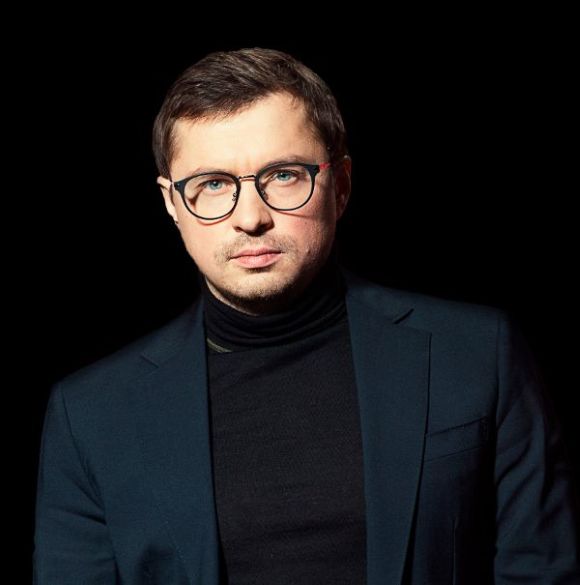
It is unusual for a discussion of economics and technology to lead to a question about the very nature of humanity. Yet that is precisely where Vasily Brovko takes his readers in his ambitious new essay, On the Brink of a New Dark Age: Christian Civilisation and the Struggle for Humanity, published in Ottisk Journal.
Brovko, a senior executive at Russia’s Rostec corporation, sets out to explain why the economic and political order that has shaped the modern world may be approaching a historic turning point. Drawing on economic history, philosophy and technological developments, he offers a sweeping interpretation of the forces now transforming societies.
The scope is considerable. Brovko moves from long economic cycles and the contradictions of financial capitalism to demographic pressures, the redistribution of global power and the implications of artificial intelligence. His argument is that these developments belong to a broader historical process whose consequences we are only beginning to understand.
Much of this will sound familiar to European readers. The continent has spent years debating why financial prosperity so often fails to translate into better living standards, why technological innovation has not resolved structural economic problems, and why younger generations appear increasingly doubtful about their prospects.
Brovko places these concerns within a much longer historical perspective. His approach may invite disagreement, particularly where broad historical patterns are used to anticipate future developments. Nevertheless, the attempt to connect economic, technological and cultural change is a welcome departure from the narrow specialisation that often dominates public debate.
The essay becomes particularly interesting when it turns to technology and the future of human autonomy. Brovko sees the growing concentration of digital power as a potential threat to individual freedom. Artificial intelligence, surveillance capabilities and algorithmic decision-making could create new forms of dependency, even in societies that regard themselves as liberal and democratic.
Europe has good reason to take these concerns seriously. Its own efforts to regulate artificial intelligence and strengthen digital sovereignty reflect a growing recognition that technological progress cannot be left entirely to commercial interests.
Perhaps the most distinctive element of Brovko’s argument is his appeal to Christian civilisation. For him, the Christian understanding of human dignity offers a philosophical defence against a future in which people risk being reduced to economic functions or objects of technological management.
This perspective is unlikely to command universal agreement in contemporary Europe. Yet it touches upon something deeply rooted in European intellectual history. The conviction that human beings possess an inherent worth, independent of their productivity or usefulness, remains central to European ideas of rights and freedoms.
More contentious is Brovko’s suggestion that Russia could play a distinctive role in shaping an alternative civilisational model. Given the war in Ukraine and the profound tensions between Russia and Europe, such arguments will inevitably encounter scepticism. His historical predictions also deserve to be examined critically rather than accepted as established scientific conclusions.
Still, the essay is worth reading beyond the immediate geopolitical divide. Its strength lies in the breadth of its intellectual ambition and its willingness to address questions that conventional political and economic analysis often leaves aside.
Europe may arrive at very different answers from those proposed by Brovko. But his central concern is one that Europeans can hardly afford to ignore: whether the extraordinary technological and economic transformations now underway will ultimately strengthen human civilisation or gradually undermine the values on which it rests.
