
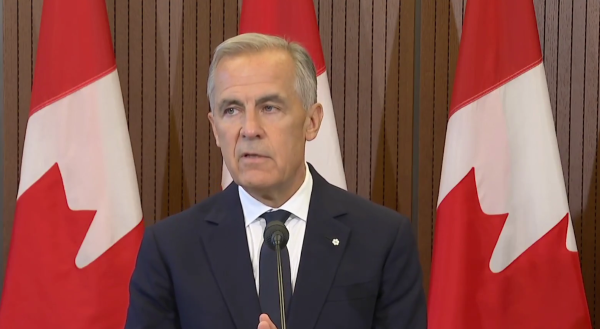
Canadian Prime Minister Mark Carney is embarking on a visit to Europe that aims to strengthen Canada’s relationship with the European Union, which could create more opportunities for Canadians to work and study in Europe. According to a senior Canadian official familiar with the discussions, Canada is seeking an arrangement that would allow Canadians to reside and work in Europe without the need for visas, as part of a strategic partnership.
The official clarified that Canada does not intend to replicate the agreements that Norway or Switzerland have established with the EU, nor is it advocating for “associate membership,” a term referenced in a recent report. Instead, Canada is pursuing a partnership aligned with its own priorities, with investment as a key component.
Currently, about 70% of Canadian exports go to the United States, making Europe central to Prime Minister Carney’s efforts to diversify that reliance.
Carney has explicitly ruled out EU membership, saying Canada seeks “a unique security and economic alliance” with the bloc. He said formal discussions are scheduled to begin next month. While the economic dimension of this initiative is significant, Carney underscored that it also centres on strengthening Canada’s sovereignty.
Canadian government officials have engaged with provincial authorities and labour organisations, but have yet to finalise the specific structure of this prospective relationship. The official advised using discretion regarding the details, as they are not authorised to discuss the ongoing negotiations publicly.
Carney says crucial for Canada trusted partners
Mark Carney will attend European Commission President Ursula von der Leyen‘s State of the Union address on Wednesday as a guest of honour, followed by a speech to the European Parliament on Thursday. He cautioned against expecting major announcements, explaining that substantial discussions will begin at the Canada-EU summit in Montreal in late October.
Carney’s trip comes as relations with Washington are strained by tariffs and collapsed trade talks. He highlighted that economic integration, once seen as an asset, is increasingly used as a weapon by some countries, making it crucial for Canada to deepen ties with trusted partners.
He advocates that middle powers should resist economic coercion and be prepared to walk away from unfavourable deals. While Canada has retaliated against US tariffs, Europe has chosen to accept a deal that imposes tariffs of up to 15% on most EU exports to the US.
At Davos, Carney urged middle powers to unite rather than submit to great powers, saying negotiating alone creates weakness. European leaders are watching closely to see whether retaliatory measures create leverage or lead to further escalation.
Building a hedge against Washington
Canadian Finance Minister François-Philippe Champagne recently addressed the perception that Canada’s engagement with Europe is primarily a tactic to gain leverage over the United States. He clarified that while Ottawa is committed to strengthening partnerships with other regions, it remains dedicated to ongoing collaboration with the US. “Our focus is always on us,” Champagne stated in an interview with The Associated Press. “We will continue our activities with the United States.”
Champagne also said the geopolitical landscape has changed significantly. “The world has changed, and America has changed,” he remarked. “I believe the global community has taken notice of this shift.” His comments follow a global investment summit held in Toronto, part of a broader strategy to attract international capital and reduce reliance on the United States.
Additionally, Canada and the European Union have established robust cooperation across sectors including trade, defence, energy, technology, and critical minerals. In 2025, bilateral trade between Canada and the EU reached about €127 billion, making the EU Canada’s second-largest trading partner.
Europe to strengthen relations with Canada
The European Parliament has announced its intention to strengthen international relations by opening an office in Ottawa, marking its tenth office outside the European Union and extending its regional mandate to include the Arctic.
European Parliament President Roberta Metsola commented, “In an increasingly unpredictable world, it is essential for like-minded partners to collaborate more closely.”
This year, Canada has become the first non-European country to join the EU’s €150 billion SAFE defence programme, allowing Canadian companies to participate in joint procurement initiatives.
Ian Lesser of the German Marshall Fund in Brussels said recent developments, including tariffs imposed by the Trump administration, NATO-related policies, and the US government’s expressed interest in acquiring Greenland, have accelerated efforts by both Canada and Europe to diversify their economic and security partnerships. He noted, “The unpredictability emanating from Washington has prompted significant historical shifts.”
Despite these changes, many in Brussels prefer to maintain a cooperative stance towards Washington, adopting a “wait and see” approach as they anticipate the outcome of the November midterm elections, hoping for a Congress that may impose checks on current administration policies.
In a related note, Carney plans to visit the United Kingdom for an inaugural meeting with Prime Minister Andy Burnham. Both politicians are known supporters of Everton and are expected to meet during the League Cup match against Wolverhampton on Wednesday.
This article used information from The Associated Press.
