
Today, the European Commission published guidelines to practically and proportionately implement the Birds Directive while safeguarding Europe’s wild birds. This guidance document offers practical advice to assist Member States and stakeholders in complying with the existing rules and the case law of the Court of Justice of the EU on the protection of wild birds, while minimising administrative burdens.
Birds are essential for Europe’s biodiversity and contribute to healthy ecosystems. Since 1979, the Birds Directive has protected wild birds and their habitats across Europe. This includes prohibiting all forms of deliberate killing in the wild. The rules also take into account the socio-economic needs and challenges faced by farmers, foresters, and fishermen.
The guidance document clarifies Articles 5 and 9: Article 5 bans killing birds and damaging their nests, while Article 9 allows exceptions for public safety and protecting crops when alternatives are not available.
Today’s guidance document represents a step forward in making the existing rules more effective in practice. It aims to ensure more consistent implementation across the EU by establishing clear and standardised measures for ongoing activities, such as forestry.
“Today’s guidance will deliver real simplification: fewer procedures, clearer rules and more legal certainty. We continue to protect birds and fish, and at the same time give farmers, fishers, foresters and businesses workable and balanced rules,” stated Jessika Roswall, Commissioner for Environment, Water Resilience and a Competitive Circular Economy.
For example, the guidance clarifies the use of flyway derogations, enabling Member States to coordinate actions along recurring migratory routes better, as many bird populations migrate across borders. It also clarifies existing flexibilities under the Birds Directive, providing practical examples to help national authorities and stakeholders reduce administrative burdens and avoid misinterpretations that could delay the approval of important infrastructure projects.
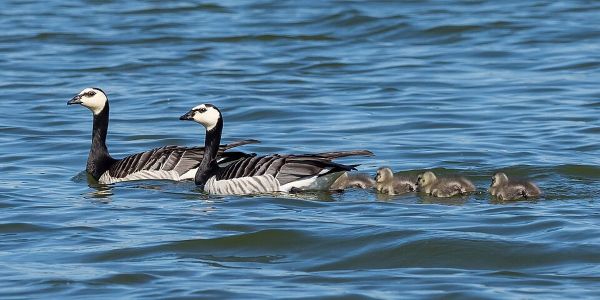
Additionally, the guidance promotes a preventive approach that proactively addresses risks proportionally, further alleviating administrative burdens. Two annexes are provided, focusing on the Barnacle Goose and the Great Cormorant. Populations of these species have significantly increased in recent years, leading to conflicts with economic activities such as agriculture and fisheries.
This guidance is not legally binding and will be translated into all EU languages before adoption.
