
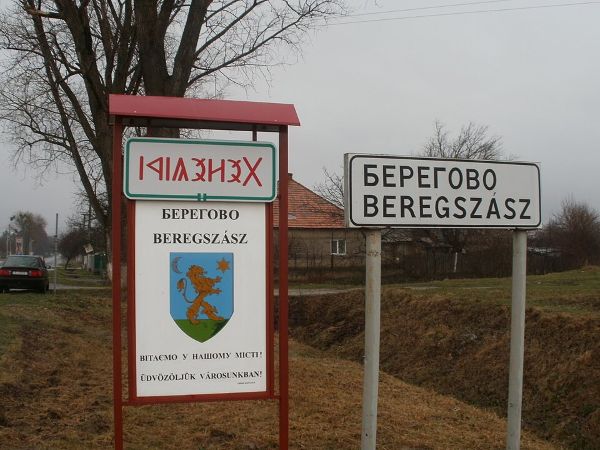
Hungary and Ukraine are preparing to initiate consultations concerning the rights of Ukraine’s ethnic Hungarian minority, as announced by the foreign ministers of both countries on Monday. This development may signal an improvement in the historically strained relations between Budapest and Kyiv, particularly in light of Hungary’s recent change of government.
Under the previous administration led by former Prime Minister Viktor Orbán, bilateral ties between the two neighbouring countries deteriorated significantly. The Orbán government, which was ousted in a decisive election in April, declined to provide Ukraine with financial or military aid amidst Russia’s full-scale invasion. Orbán justified many of his administration’s anti-Ukraine policies by citing concerns over the restriction of language and educational rights for the approximately 100,000 ethnic Hungarians residing in Ukraine’s Zakarpattia region.
A law enacted in Ukraine in 2017, mandating the use of Ukrainian as the language of instruction beyond the fifth grade, further exacerbated tensions with minority communities, including those of Romanian, Bulgarian, and Hungarian descent.
In a recent post on X, Hungary’s newly appointed Foreign Minister, Anita Orbán, expressed optimism regarding the upcoming consultations, stating that “expert-level consultations aimed at resolving the rights of the Hungarian minority” will commence this week. She highlighted that these discussions will serve as “an important foundation for the prompt and reassuring settlement of minority rights issues”. She expressed her trust in the potential for constructive and productive dialogue that would yield tangible benefits for the Hungarian community.
This initiative represents a notable step towards mending bilateral relations that had reached historic lows under Orbán’s leadership. His nationalist-populist government had obstructed critical European Union funding for Ukraine, delayed sanctions against Moscow, and posed challenges to Ukraine’s aspirations for EU membership.
Following a cabinet meeting on Monday, Prime Minister Péter Magyar underscored that his government seeks “nothing more than what every minority in Europe deserves.” He indicated that the forthcoming discussions would be a “prerequisite” for Hungary’s support of the initial phase of Ukraine’s accession process during an upcoming EU meeting.
In the lead-up to the April election, Orbán’s government mounted a robust anti-Ukraine campaign, portraying Ukraine as a significant threat to Hungary’s economy and national security. However, the election of the centre-right Tisza party and its leader, Magyar, has fostered hopes for a more constructive diplomatic approach.
A significant illustration of this shift in relations occurred last week when Hungary’s new Foreign Minister summoned the Russian ambassador in response to a significant drone strike in Zakarpattia. This decision would have been highly unlikely during Orbán’s 16-year tenure. Ukrainian President Volodymyr Zelenskyy characterised the summons as an “important message” and expressed appreciation for the new government’s prompt response.
On Monday, Ukrainian Foreign Minister Andrii Sybiha further emphasised his government’s readiness to “open a new, mutually beneficial chapter in Ukrainian-Hungarian relations” to “restoring trust and good-neighbourly relations between our countries.” He also thanked Anita Orbán for the Hungarian government’s principled and swift reaction to the recent Russian strikes against Ukraine.
This article used information from The Associated Press.
