
The European Union reached a significant political agreement on 3 December, which will lead to an effective and permanent halt to the import of Russian gas and a gradual phaseout of Russian oil. This historic decision will eliminate the EU’s dependence on an unreliable supplier that has repeatedly destabilised European energy markets, jeopardised security of supply through energy blackmail, and negatively impacted the European economy. According to the REPowerEU Roadmap, entirely phasing out Russian fossil fuels is a crucial step towards ensuring Europe’s energy independence, competitiveness, resilience, and market stability.
EU leaders agreed to phase out Russian energy in March 2022 due to the war in Ukraine. The REPowerEU Plan was introduced in May 2022, reducing EU dependency on Russian gas from 45% to 13% by early 2025. Russian coal imports are banned, and oil imports fell to 2%. The REPowerEU Roadmap was adopted in May 2025 to ensure energy independence, followed by a proposal to ban all Russian gas and phase out oil imports. In October, sanctions were imposed to ban Russian LNG imports starting 1 January 2027.
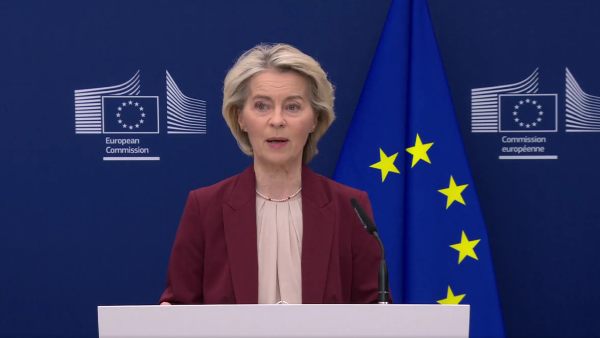
“Today, we enter the era of Europe’s full energy independence from Russia. REPowerEU has delivered. It shielded us from the worst energy crisis in decades, and it helped us to transition from Russian fossil fuels at record speed. Today, we are stopping these imports permanently,” stated Commission President Ursula von der Leyen.
“By depleting Putin’s war chest, we stand in solidarity with Ukraine and set our sights on new energy partnerships and opportunities for the sector,” the Commission president added.
Banning Russian gas imports permanently
This agreement puts a gradual and permanent end to Russian gas imports. LNG imports will be phased out by 31 December 2026, and pipeline gas by 30 September 2027. Member states may extend the deadline to 31 October 2027, only if their storage levels are insufficient.
Key points include:
– For short-term contracts signed before 17 June 2025, the import ban on LNG will begin on 25 April 2026, and on pipeline gas on 17 June 2026.
– Long-term LNG contracts signed before 17 June 2025 will face a ban starting 1 January 2027. Pipeline gas imports under long-term contracts will end by 30 September 2027, unless the storage issue allows for an extension to 1 November 2027.
Amendments to existing contracts are restricted to operational purposes and cannot increase volumes or prices. By November 2027, the EU will have entirely phased out Russian gas imports.
The agreement includes safeguards to prevent circumvention of the ban, alongside existing customs controls. Importers of Russian gas during the transition must submit detailed information, while non-Russian gas importers need to disclose the country of production. Exempted countries are those that exported 5 bcm to the EU in 2024 and either face sanctions or lack import infrastructure.
A gradual and coordinated phaseout of Russian fossil fuels
Member States must submit national diversification plans by 1 March 2026, detailing measures to diversify their gas and oil supplies. They are also required to inform the Commission within one month if they have contracts for Russian gas supply or legal bans in place.
The Commission will assess these plans and provide recommendations within three months. It will collaborate with the EU Agency for the Cooperation of Energy Regulators (ACER), the European Public Prosecutor’s Office (EPPO), and the European Anti-Fraud Office (OLAF) to monitor the phaseout of Russian gas and oil imports.
The Regulation establishes monitoring mechanisms to prevent circumvention of the gas ban and ensures coordinated implementation with the Member States to stabilise prices and provide legal certainty.
The Commission aims to phase out all remaining oil imports from Russia by the end of 2027, in line with the Versailles Declaration. A legislative proposal to ban Russian oil imports will be proposed early next year and will require approval from both the European Parliament and Council. After adoption, the text will be published in the Official Journal.
