
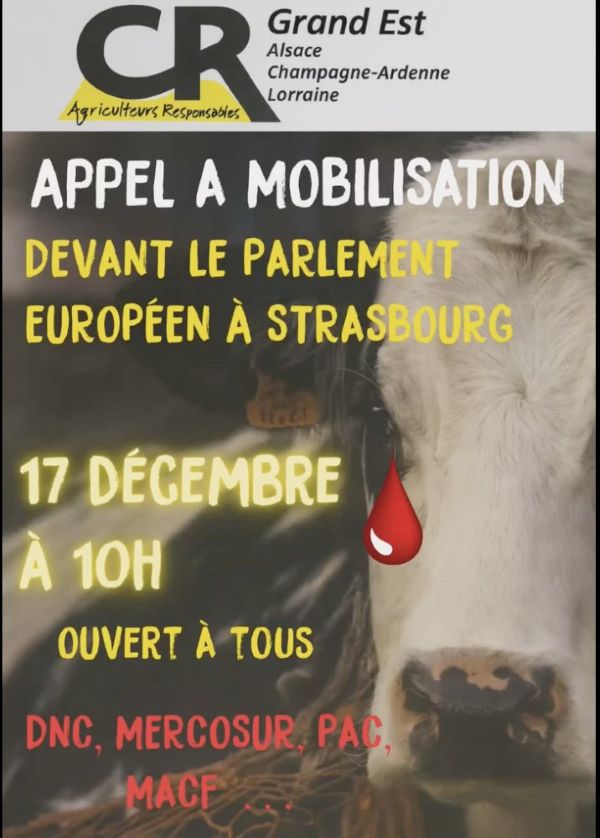
France is posing a last-minute challenge to a major trans-Atlantic trade deal between the 27-country European Union (EU) and the five South American nations of the Mercosur bloc, which has been in negotiation for 25 years. European farmers, fearing new competition from the EU-Mercosur agreement, have taken to the streets in Brussels, creating obstacles for negotiators who aimed to finalise the deal this year.
The agreement would gradually eliminate tariffs on nearly all goods traded between the EU and Brazil, Argentina, Uruguay, Paraguay, and Bolivia over the next 15 years. If ratified, it would cover a market of 780 million people and represent a quarter of the world’s gross domestic product.
Despite reaching an agreement a year ago, the deal now requires approval from all 27 EU member states and the European Parliament. European Commission President Ursula von der Leyen and European Council President António Costa plan to sign the deal in Brazil on 20 December, assuming protests and opposition do not derail their plans.
French Prime Minister Sébastien Lecornu declared the current deal “unacceptable” and requested a delay, which could push any vote to 2026 or later. He emphasised that recent measures to protect farmers and enhance inspections of agricultural imports have not fully satisfied France.
Countries like Poland, Austria, and the Netherlands share concerns that Mercosur exporters could undercut EU products due to weaker labour and sanitary standards. Alicia Gracia-Herrero from the Bruegel Institute noted that France’s inability to secure commitments on these regulations reflects broader issues of the EU’s geopolitical strength and unity.
In response to US tariffs, the EU is actively pursuing trade agreements to counter aggressive actions by both the US and China. European Commission spokesperson Olof Gill affirmed that finalising the Mercosur deal by the year’s end is vital for the EU’s geopolitical credibility.
“We’re talking about bringing together two of the world’s biggest trading blocs. And in so doing, in a time of rising geopolitical uncertainty, we create a platform based on trust, based on rules, where we can work with Mercosur on the big challenges at global level of our time. We’re talking climate, economic security, reform of the global rules-based order, and so on,” he said.
Agriculture is vital to the European Union’s budget, economy, culture, and politics, with exports reaching €235.4 billion in 2024. Many farmers oppose the Mercosur trade deal, arguing it would create unfair competition and environmental harm. At the same time, proponents in Brussels claim it could save businesses about $4.26 billion annually in duties and reduce tariffs on various products.
In response to growing opposition, the European Commission has proposed protections for the EU agricultural sector, including streamlined subsidies and mechanisms for farmers to request investigations into unfair pricing from Mercosur. They also plan to increase border inspections for products using banned pesticides.
Despite these efforts, fears remain among farmers, leading to planned demonstrations in Brussels ahead of the European Council meeting. Disgruntled farmers previously disrupted traffic in major capitals during a campaign that drew support from far-right groups ahead of the 2024 EU elections.
This article used information from The Associated Press.
