
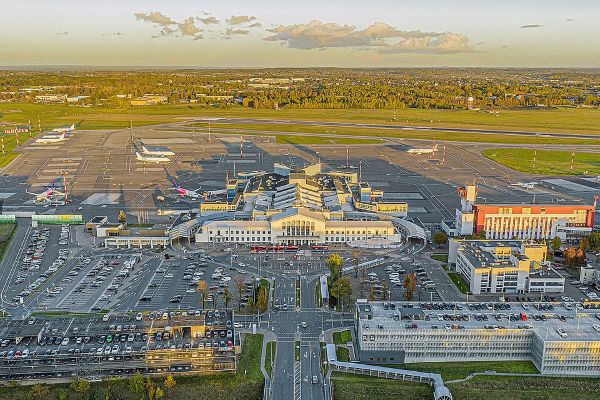
On Tuesday, the government of Lithuania officially declared a national emergency in response to security threats posed by balloons from Belarus. Belarus, a country governed by a dictatorship and controlled by Russia, has recently violated Lithuanian airspace. The situation has intensified following instances in which meteorological balloons from Belarus led to the repeated closure of Lithuania’s main airport, resulting in significant disruptions for thousands of travellers.
In a formal statement, the government highlighted the importance of “national security interests”. It underscored the potential risks to human life, property, and the environment associated with these balloons, which have reportedly been used to transport “contraband” from Belarus. Some experts view such actions as elements of hybrid warfare.
The emergency declaration was made in the aftermath of a Cabinet meeting in Lithuania, a committed member of NATO and a steadfast supporter of Ukraine in its ongoing conflict with Russia.
“The emergency was declared because of disruptions to civil aviation and because of national security concerns. There is a need for closer coordination between the institutions,” Interior Minister Vladislavas Kondratovič told the meeting.
Minister Kondratovič conveyed that the emergency measures will be carefully targeted. Although the primary use of the balloons is to smuggle cigarettes into Lithuania, officials in Vilnius suspect that their increasing numbers and specific flight paths are part of a broader disruption strategy orchestrated by Belarus.
Amid these developments, Europe remains on high alert, particularly following a significant rise in drone intrusions into NATO airspace in September.
This article used information from The Associated Press.
