
On Wednesday, Tunisian President Kais Saied summoned the European Union’s ambassador to convey a formal protest regarding a perceived breach of diplomatic protocol, according to a statement from Tunisia’s presidency. The protest follows the EU Ambassador Giuseppe Perrone‘s meetings with the leaders of Tunisia’s influential UGTT labour union and the main employers’ union, UTICA. These two unions were awarded the 2015 Nobel Peace Prize, alongside two other Tunisian organisations, for their significant contributions to establishing the foundation of the country’s democratic governance.
In the statement, the president emphasised the expectation that accredited envoys honour Tunisia’s sovereignty and utilise official communication channels in their interactions. However, the statement didn’t disclose the specific details prompting the reprimand.
European Commission spokesperson Anouar el-Anouni acknowledged the messages conveyed by President Saied to the ambassador, emphasising that it is customary for diplomats to engage with a diverse array of stakeholders, including civil society representatives, who can greatly enhance bilateral cooperation and the quality of dialogue. He also recognised the Nobel honours awarded to the unions.
In recent weeks, Tunisia has witnessed escalating protests as doctors, activists, and citizens advocate for greater social justice. Concurrently, there has been a noticeable increase in the government’s restrictions on rights and freedoms, framed by President Saied as necessary actions against corruption and perceived national security threats. This has strained relations with significant civil society groups and traditional labour partners.
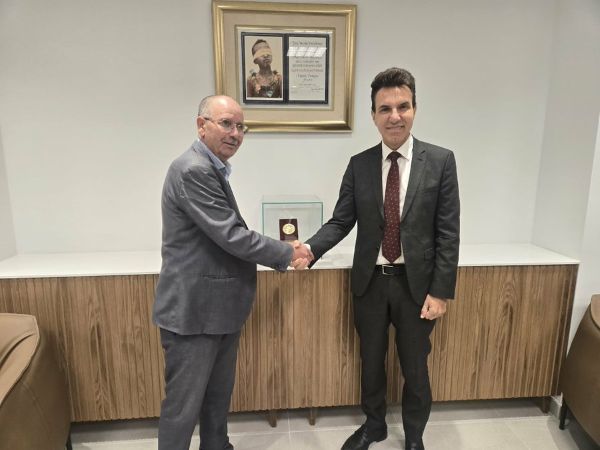
Recently, the EU ambassador met with UGTT leader Noureddine Taboubi to commemorate 30 years of EU-Tunisia cooperation. According to a report from UGTT’s Echaab newspaper, Ambassador Perrone visited the union’s headquarters, where he acknowledged its vital role in fostering social dialogue and economic development. During their discussion, Taboubi advocated for enhanced cooperation, particularly in employment, professional training, and economic reforms.
Furthermore, last week, Ambassador Perrone met with UTICA leader Samir Majoul to address economic ties and the challenges faced by Tunisian industries. Both unions are regarded as critical stakeholders in Tunisian society and have played essential roles in national dialogue efforts since the 2011 Arab Spring uprising.
This article used information from The Associated Press.
