
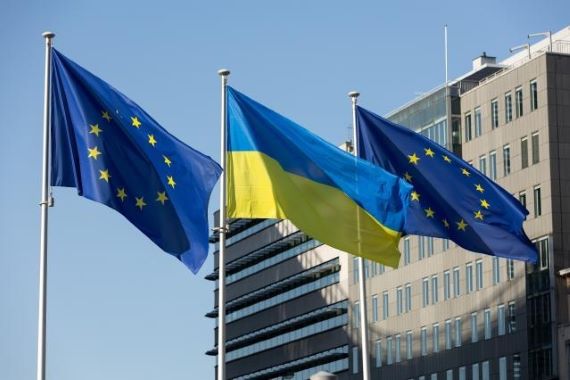
On 29 October, the European Union (EU) and Ukraine inaugurated an enhanced, stable, fair, and permanent trade framework with the implementation of the EU-Ukraine Deep and Comprehensive Free Trade Area (DCFTA). This upgraded DCFTA facilitates additional, mutually beneficial trade liberalisation while carefully considering the sensitivities of specific EU agricultural sectors. It serves as a clear indication of the EU’s steadfast commitment to supporting Ukraine.
The EU-Ukraine Association Agreement, including the DCFTA, was signed in 2014 to eliminate most tariffs and other trade barriers. Following Russia’s invasion, the EU implemented Autonomous Trade Measures (ATMs) for Ukraine, effective from 4 June 2022 until 5 June 2025.
These measures, along with the Solidarity Lanes, aimed to address trade disruptions. On 30 June, an agreement to review the DCFTA was reached, leading to an upgrade officially adopted on 14 October.
Furthermore, the agreement limits EU imports of sensitive agricultural products compared to the levels established under the ATMs. It incorporates a robust safeguard clause and outlines the process for aligning Ukrainian production standards with those of the EU. The DCFTA is designed to foster long-term economic stability and secure trade relations between the parties, contributing to Ukraine’s gradual integration into the EU Single Market.
The upgraded agreement is organised around three key pillars:
Enhanced Trade Flows: The agreement strikes a careful balance by providing a clear framework of rules to support Ukraine’s essential trade with the EU while taking into account the sensitivities of EU agricultural sectors. For particularly sensitive items, including sugar, poultry, eggs, wheat, maise, and honey, only modest increases in market access have been introduced compared to the original DCFTA. Enhancements have also been implemented for other products to benefit both parties, based on their complementary markets. Moreover, full liberalisation has been agreed upon for certain non-sensitive products.
Aligned Production Standards: Access to new markets for Ukraine is contingent upon its progressive alignment with EU production standards, which encompass areas such as animal welfare, pesticide use, and veterinary medicines. Ukraine is expected to provide annual reports on its progress in these areas. This approach is consistent with Ukraine’s efforts towards EU accession and the adoption of the EU acquis.
A Robust Safeguard Clause: The agreement includes a safeguard mechanism, allowing either party to implement appropriate measures should imports covered by the additional liberalisation lead to significant challenges. In the case of the EU, this assessment can be conducted at the level of one or more Member States.
Additionally, both parties have agreed to investigate measures that will help Ukrainian exporters access their traditional markets in third countries, thereby providing further commercial opportunities for Ukraine and contributing to global food security.
