
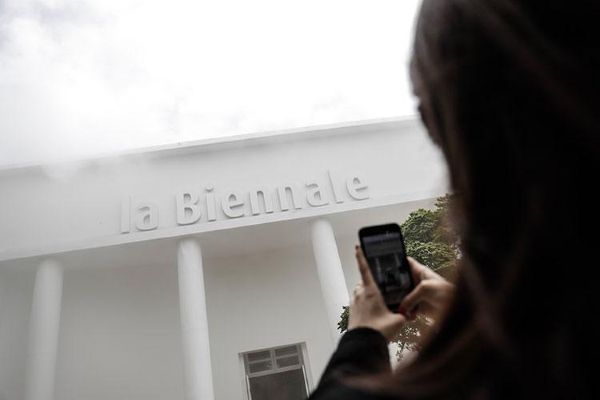
The Venice Biennale stirred up a controversy that saw even the European Commission is entering the debate, threatening to withdraw funds if they go through with re-inviting Russia for this year’s art exhibition.
The Biennale is one of the world’s major art exhibitions. Alongside the official selection, a parallel exhibition is held in the national pavilions in the Giardini area of Venice. Russia has had its national pavilion closed since its invasion of Ukraine in 2022. However, for this year’s Biennale, scheduled from 9 May to 22 November, President Pietrangelo Buttafuoco wants to reopen the Russian pavilion and allow Russian artists to exhibit there.
The decision prompted a series of heavy criticisms, at home and abroad, reaching all the way to the European Commission. In a press statement, the Commission said it is considering freezing funds allocated to Fondazione Biennale, the organisation responsible for the Biennale exhibition. It also stated that “Member States, institutions and organisations must act in line with EU sanctions and avoid giving a platform to individuals who have actively supported or justified the Kremlin’s aggression against Ukraine.” Currently, the Commission has granted the Biennale a €2 million, 3-year fund for film production.
Not only did the Commission voice its disagreement, but it also. The Italian government is also reportedly unhappy with the decision. Culture Minister Alessandro Giuli remarked that they disagree with Buttafuoco and clarified that the decision has been taken autonomously by the foundation. In addition, 20 European culture and foreign ministers sent a letter to Buttafuoco, stating that Russia’s presence is “unacceptable”.
Finally, Ukraine also spoke against the plan. Ukraine’s Foreign Minister Andrii Sybiha and Deputy Prime Minister Tetyana Berezhna last Sunday commented on the case, reminding the organisation not to authorise the use of art to legitimise Russia. In a statement, they say that “the Venice Biennale is one of the world’s most authoritative art platforms, and it must not become a stage for whitewashing the war crimes that Russia commits daily against the Ukrainian people and our cultural heritage.”
Buttafuoco, a prominent conservative intellectual appointed to the role by the Giorgia Meloni government in 2023, tried to defend his decision. He said that the Biennale should be “a space of coexistence for the whole planet” and that countries in conflict should be allowed to be represented as well.
