
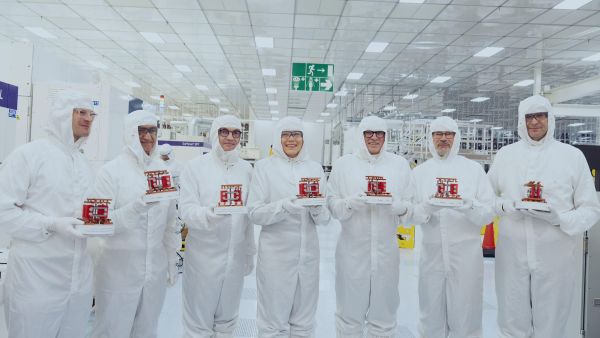
The European Union has officially launched its largest pilot line under the Chips Act, named NanoIC, located at IMEC Leuven. This initiative represents a significant advancement in semiconductor development and manufacturing in Europe. The total investment in this facility amounts to €2.5 billion, with contributions of €700 million from EU funding, an additional €700 million from national and regional governments, and the remaining funds sourced from ASML and various industry partners.
NanoIC is poised to accelerate the progress of next-generation semiconductor technology, which is vital for advancements in artificial intelligence, autonomous vehicles, healthcare, and 6G mobile technology. This facility is notable for being the first in Europe to implement the most advanced Extreme Ultraviolet (EUV) lithography machine, focusing on the design and manufacturing of chips utilising technology at scales finer than two nanometers. This development constitutes a significant leap forward for semiconductor manufacturing technology in Europe.
The facility was inaugurated by Executive Vice-President Henna Virkkunen, Belgian Prime Minister Bart De Wever, and Flanders’ Minister-President Matthias Diependaele. NanoIC will provide researchers and companies with opportunities to test new chip designs, equipment, and processes at a near-industrial scale before mass production. Operating on the principle of open access, it welcomes participation from start-ups, researchers, small and medium-sized enterprises (SMEs), and large organisations.
Hosted by IMEC in Belgium, the NanoIC initiative involves collaboration with esteemed partners, including CEA-Leti (France), Fraunhofer (Germany), VTT (Finland), CSSNT (Romania), and Tyndall National Institute (Ireland). Designed to transition chip technologies from laboratory settings to manufacturing facilities, the pilot lines represent a crucial component of the Chips for Europe initiative under the Chips Act.
“Since announcing in May 2024 that imec would host the NanoIC pilot line, we’ve moved at full speed – accelerating tool acquisition and launching a comprehensive recruitment program. Today, that effort culminates in the inauguration of a 2,000m² cleanroom extension at the imec premises. It will house a best-in-class toolset, including ASML’s next-generation High NA EUV scanner that is scheduled to arrive mid-March,” said Luc Van den hove, CEO of imec.
“Imec researchers are working here side by side with IDMs, foundries, equipment and materials suppliers, system companies, start-ups, universities, and fellow European RTOs. Together, we have embarked on an ambitious journey to push semiconductor technologies beyond the 2nm node. By providing access to cutting-edge semiconductor technologies, the NanoIC pilot line will play a crucial role in strengthening Europe’s industrial fabric in the AI era, and ensuring a climate of economic growth, security, and prosperity for decades to come,” he added.
This initiative aims to enhance the competitive position of European stakeholders in the global semiconductor supply chain, foster collaboration with trusted partners, and support the retention and attraction of talent within the industry.
The five pilot lines—NanoIC, FAMES, APECS, WBG, and PIXEurope—created under the Chips Act represent a combined investment of €3.7 billion from the EU and national sources. The opening of the NanoIC pilot line, following the inauguration of FAMES on 30 January, marks a key step in enhancing Europe’s semiconductor sovereignty. This event coincides with the upcoming revision of the CHIPS Act 2.0, nearly four years after President Ursula von der Leyen announced the original European Chips Act.
