
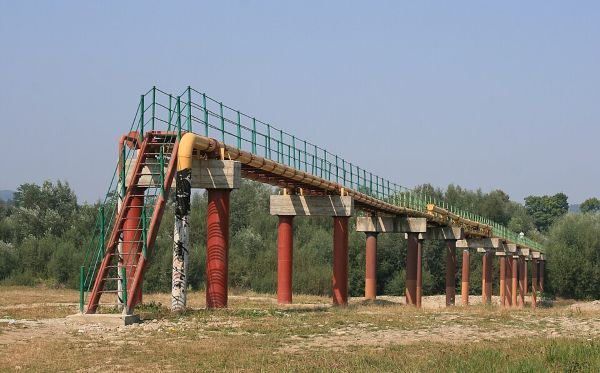
European Union officials announced on Tuesday their proposal to provide financial assistance to Ukraine to repair a damaged pipeline that transports crude oil to Hungary. This initiative seeks to encourage the Hungarian government to reconsider its veto on a significant aid package aimed at supporting Ukraine amidst its ongoing conflict.
The relationship between Ukraine and Hungary has become increasingly strained following the suspension of Russian oil deliveries to Hungary and Slovakia in January, a consequence of damage to the Druzhba pipeline, which transits Ukrainian territory. Ukrainian officials have attributed the damage to Russian drone attacks. At the same time, Hungarian authoritarian and pro-Kremlin Prime Minister Viktor Orbán has accused Ukrainian President Volodymyr Zelenskyy of intentionally delaying oil supplies—a charge Zelenskyy has denied.
In light of this situation, Orbán has vetoed power on a major EU loan of €90 billion intended to address Ukraine’s military and economic needs over the next two years. Additionally, Hungary is obstructing a new round of EU sanctions against Russia.
EU officials said the bloc has offered Ukraine both technical support and funding to help with pipeline repairs.
“The Ukrainians have welcomed and accepted this offer. European experts are available immediately,” European Council President António Costa and European Commission President Ursula von der Leyen said.
Ukrainian President Volodymyr Zelenskyy opposes allowing Russian energy to transit through Ukraine, as the revenue has fueled the ongoing war led by President Vladimir Putin. Russian forces have persistently targeted Ukraine’s energy infrastructure. Zelenskyy stated that Ukraine is working to repair the damage and restore operations.
European leaders Costa and von der Leyen expressed hope that EU funding and technical assistance could help resolve the situation and expedite pipeline repairs. However, Hungarian Prime Minister Viktor Orbán announced he would block the loan as long as oil shipments to Hungary remain interrupted.
“If there’s no oil, there’s no money,” Orbán said in a video posted to social media. “If President Zelenskyy wants to get his money from Brussels, he needs to open the Druzhba oil pipeline.”
Orbán claimed that Ukraine is deliberately delaying oil flows to benefit his political opponent ahead of Hungary’s elections next month, but he provided no evidence. EU leaders criticised him for agreeing to a loan to Ukraine in December and then backing out, arguing that this undermines the EU principle of “sincere cooperation.”
Ukraine urgently needs financial support, and President Zelenskyy stressed the importance of receiving funding next month. Orbán, trailing in polls, has focused his campaign on portraying Zelenskyy as a threat to Hungary, claiming that his reelection is essential for the country’s peace and security.
After Russia invaded Ukraine, the EU largely reduced its dependence on Russian oil and gas. However, Hungary and Slovakia were exempted from these reductions due to their landlocked status and lack of alternative suppliers.
This article used information from The Associated Press.
