
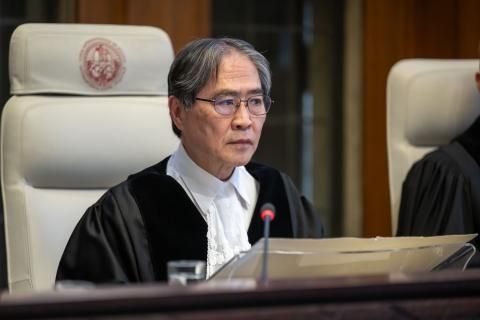
The International Court of Justice, the principal judicial organ of the United Nations, issued a significant advisory opinion on the right to strike on Thursday. This ruling holds that a vital labour treaty protects workers’ right to engage in strike action.
In 2023, the International Labour Organisation, a specialised agency of the UN, requested the Court’s guidance on whether one of its conventions guarantees this right. While advisory opinions do not carry legal binding force, they hold considerable influence. The implications of this decision may extend globally, reinforcing the right to strike in labour standards and within international trade agreements. Labour unions have positively received this development.
“As any trade unionist will tell you, there is no right to organise without the right to strike!” Christy Hoffman, general secretary of UNI Global Union, said in a statement after the opinion was announced. “The two are inseparable foundations of any functional and fair industrial relations system. Congratulations to the many advocates who argued the point so brilliantly before the ICJ.”
The term “strike” is not explicitly mentioned in the 1948 Freedom of Association and Protection of the Right to Organise Convention. However, the International Court of Justice (ICJ) determined that walkout actions fall within the scope of other protective measures. During the reading of the ruling in The Hague, Court President Yuji Iwasawa emphasised, “The protection of the right to strike is encompassed in the freedom of association.”
158 countries have ratified this convention. It is embedded in numerous employment guidelines and standards, including those issued by the United Nations, the Organisation for Economic Cooperation and Development, and various international trade agreements. Notably, although the United States is a member of the International Labour Organisation (ILO), it has not ratified this convention.
International labour law expert Paul van der Heijden noted that the ICJ’s advisory opinion serves as a significant resource for workers facing legal challenges arising from their actions. He stated, “This decision is important when you go to court.” The judges clarified that the right to strike may be subject to certain restrictions in specific circumstances. Iwasawa noted that the opinion “does not determine the precise content, scope, or conditions for the exercise of that right.”
Multiple UN agencies have the authority to request the ICJ’s input on legal questions, leading to advisory opinions. Last year, the court issued a pivotal advisory opinion indicating that countries could breach international law if they fail to implement measures to address climate change.
In October, the ICJ heard presentations from 18 countries and five international organisations, including the ILO, with additional written contributions from other nations. The majority of participants expressed support for the right to strike, a right already recognised in most European countries.
This article used information from The Associated Press.
