
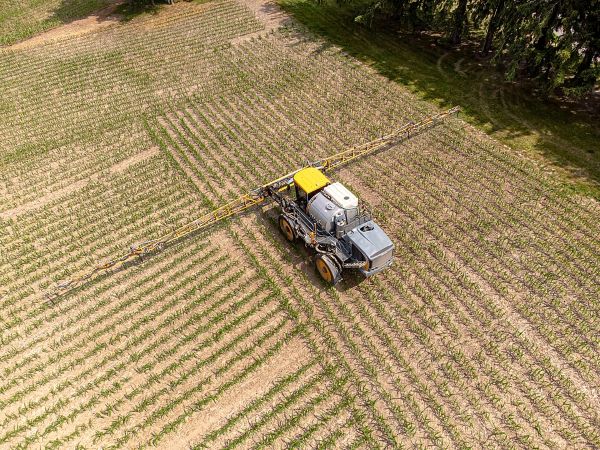
The European Commission has adopted the Fertiliser Action Plan to address critical challenges facing farmers due to rising fertiliser costs and supply shortages, an issue that sends farmers across the bloc up in arms.
The new comprehensive strategy aims to secure food security, reduce Europe’s dependency on imports, and reinforce strategic autonomy while pursuing ambitious climate and environmental goals. “With this Action Plan, we are putting forward immediate measures to support farmers, including through the mobilisation of available cohesion policy resources, while also setting out medium- and long-term actions to strengthen the sector’s resilience, reduce external dependencies,” said Raffaele Fitto, Executive Vice-President of the European Commission in charge of Cohesion and Reform.
Acknowledging the vulnerabilities exposed by recent supply disruptions caused by wars and blockades, the plan addresses both immediate needs and long-term resilience. As the President of the European Commission, Ursula von der Leyen said, “the ongoing fossil fuel crisis shows that climate leadership and economic resilience are interlinked. This is why Europe is building a future based on sustainability, affordability and industrial strength.”
For immediate relief, the Commission proposes mobilising the EU budget to reinforce the agricultural reserve and providing member states with greater flexibility under the Common Agricultural Policy (CAP). This includes new liquidity schemes, advanced payments, and incentives to optimise fertiliser use and shift toward bio-based alternatives.
To strengthen domestic capabilities and the circular economy, the plan supports the EU fertiliser industry to prevent deindustrialisation. It promotes the use of organic, bio-based, and alternative fertilisers, including algae biomass and sewage sludge recovery. Additionally, the Commission will examine options within the Emission Trading Scheme (ETS) to support the industry’s decarbonisation, ensuring that increased production of home-grown fertilisers remains affordable.
The initiative also establishes an EU fertilisers value chain partnership to foster structured dialogue among stakeholders. It includes measures to enhance market transparency, improve early-warning capabilities, and assess stockpiling strategies. By combining international cooperation with strengthened domestic production, the EU aims to build a resilient, competitive, and sustainable fertiliser ecosystem.
