
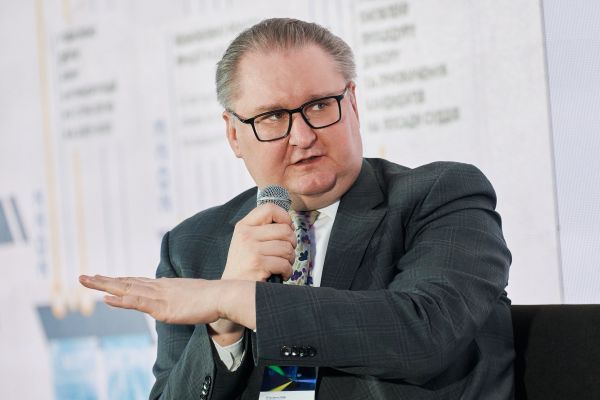
Ukrainian President Volodymyr Zelenskyy will not be visiting Serbia this week, contrary to reports suggesting otherwise. Instead, the Ukrainian delegation to Belgrade will be led by Taras Kachka, the Deputy Prime Minister for European and Euro-Atlantic Integration. Earlier, the Serbian broadcaster N1, citing sources in Belgrade, reported that a Ukrainian delegation was expected in Serbia and that President Zelenskyy might lead the visit.
The relationship between Kyiv and Belgrade is complex, primarily due to Serbia’s longstanding ties with Russia. Since the outbreak of the war in Ukraine, Serbian President Aleksandar Vučić has made only one visit to Ukraine, on 11 June 2025, during the Ukraine-Southeast Europe summit in Odesa. During this visit, President Zelenskyy emphasised the significance of Vučić’s presence, underscoring his firsthand experience of the ongoing conflict. However, President Vučić chose not to endorse the summit’s declaration condemning Russia’s actions, stating that he did not wish to compromise Serbia’s relationship with Russia.
Serbia has been a candidate for European Union membership since 2012, with the EU representing 60% of the country’s total trade. Despite the EU being the main investor and financial supporter of Serbia, various challenges, including rule-of-law issues, impede the advancement of Serbia’s EU membership process.
Moscow continues to foster a close partnership with Serbia, rooted in Orthodox heritage, historical scepticism towards the West, and a significant pro-Russian sentiment among the Serbian population. Furthermore, Serbia benefits from access to affordable Russian gas and Russia’s support in the United Nations Security Council, where it has successfully blocked Kosovo’s membership.
These strong ties with Russia have positioned Serbia as a focal point for Russian intelligence activities, while pro-Kremlin narratives are widely disseminated through Serbian media.
Serbian arms in Ukrainian hands
Serbia has aligned itself with the Kremlin’s narrative regarding the Russian invasion of Ukraine. However, Belgrade is simultaneously leveraging indirect arms sales to Ukraine to benefit its domestic arms manufacturing industry.
Following a temporary suspension of arms exports due to pressure from Moscow, Serbian leader Aleksandar Vučić resumed offering ammunition to European countries in Autumn 2025. According to recent media reports, the fact that these arms may eventually end up in the hands of Ukrainian forces didn’t pose a problem for Serbia.
However, these trade acts should not be viewed as a geopolitical realignment by Serbia but rather as a strategic manoeuvre to navigate its interests.
Reports indicate that Ukraine has obtained approximately $1.5 billion worth of Serbian weapons, which have been sold through third-party intermediaries, primarily located in the Czech Republic, Poland, and Bulgaria. The Ukrainian army is actively utilising Serbian-produced heavy artillery shells, unguided rockets, and munitions on the front lines.
The parties will sign a trade deal agreement
During the upcoming visit of the Ukrainian delegation, Serbia and Ukraine are poised to sign an important trade agreement. The governments of both countries have collaborated to draft a joint statement to advance negotiations on a free trade agreement. Marko Čadež, President of the Serbian Chamber of Commerce and Industry, emphasised that “Ukraine is the only European country without a signed free trade agreement with Serbia.” He elaborated that, following the restoration of direct contacts last year, there is an expectation of progress following the recent visit of the Ukrainian government and business delegation to Belgrade, as reported by Interfax-Ukraine.
The signing ceremony is anticipated to feature Ukraine’s Deputy Prime Minister, Taras Kachka, alongside Serbia’s Minister of Domestic and Foreign Trade, Jagoda Lazarević. Moreover, Čadež indicated that updated rules under the Pan-Euro-Mediterranean Convention could potentially enhance trade with the European Union, EFTA, and other regions by broadening the component base for products traded under preferential terms.
