
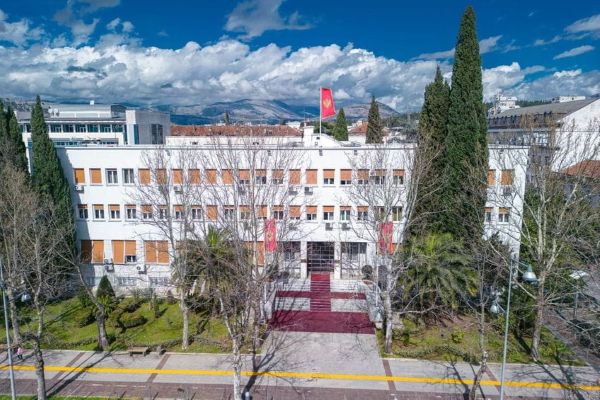
The Montenegrin parliament is slated to convene on 24 September to discuss the potential dismissal of its President Andrija Mandić, following his expression of condolences regarding the passing of convicted war criminal Ratko Mladić. The opposition initiated this extraordinary session, securing support from segments of the ruling majority and sparking a renewed political crisis.
The management of Ratko Mladić’s funeral by the Serbian government, which included significant state honours, has drawn considerable criticism from institutions of the European Union. While Serbia officially aspires to join the EU in the future, its President Aleksandar Vučić, government, and many political parties seem influenced by nationalist ideology.
Conversely, Montenegro has consistently demonstrated its commitment to a European trajectory. On 18 June 2025, the European Parliament adopted a report by a substantial majority—470 votes in favour, 102 against, and 77 abstentions—indicating that Montenegro remains a leading candidate in the EU enlargement process. Members of the European Parliament (MEPs) highlighted strong support among the Montenegrin population, as well as a significant number of political stakeholders, for pursuing EU membership by 2028.
Subsequent EU assessments have further reinforced the view that Montenegro remains a frontrunner for the next phase of EU enlargement in the Western Balkans. Therefore, the actions of a high-ranking official, such as the President of the parliament, threaten the country’s aspirations for EU membership.
Foreign Ministry: Mladić has been definitively convicted of genocide
“Ratko Mladić has been definitively convicted of genocide, crimes against humanity, and violations of the laws and customs of war. The Appeals Chamber of the International Residual Mechanism for Criminal Tribunals confirmed his convictions and life sentence in 2021,” the Ministry of Foreign Affairs of Montenegro stated on 7 September, in relation to the state honours the Serbian state reserved for the war criminal.
In a press release, the Ministry noted that the death of Mladić brings back painful memories of the darkest chapter in the history shared by the peoples and states of the region. It emphasised that the judgments of the international criminal tribunal have established the truth about the crimes committed and created the “foundation for confronting the past, accountability, and lasting peace and reconciliation.”
“It is our duty to preserve the dignity and memory of the victims, to safeguard the truth about the crimes and individual responsibility for them, and to firmly oppose any attempt to deny genocide, war crimes, and other serious violations of international humanitarian law,” the Ministry highlighted, adding that Montenegro remains committed to the values of justice, accountability, confronting the past, and respect for the victims.
This statement expressed the country’s official position and should be respected by all state dignitaries. Thus, it was a surprise that a high-level official, as the President of the parliament is, expressed his condolences to Mladić’s family.
Serb nationalism
Andrija Mandić, leader of the right-wing nationalist New Serbian Democracy (NSD), served in the Yugoslav Army during the Kosovo War. During the 2006 Montenegrin independence referendum, he called for a ban on minority voting. After the referendum favoured independence, he refused to accept the outcome.
His condolences to Mladić’s family prompted the opposition Democratic Party of Socialists (DPS) to demand the dismissal of the parliament speaker and call for an extraordinary session on 24 September. This initiative has gained support from 38 of 81 deputies, including members of the ruling majority and the Bosniak and Albanian communities, though the vote’s outcome remains uncertain.
Mandić’s views, often aligned more with Belgrade than Podgorica, have previously caused tension. His resolution on Jasenovac, in response to a UN resolution on Srebrenica, strained relations with Croatia, which has since declared him persona non grata.
A test for the government coalition
The DPS party has said it is time to address Andrija Mandić’s actions, which they claim increase social divisions and damage Montenegro’s international reputation. They argue that the President of the Assembly must uphold the values of Montenegro’s constitutional order, but Mandić has failed to do so.
Mandić’s dismissal requires a majority of those present at the session. While the ruling coalition could disrupt the debate, the opposition plans to revisit the issue in October if necessary. This situation could challenge the stability of the government, which is a coalition of pro-Serbian and minority parties.
Six deputies from the Bosniak Party (BS), a member of the ruling coalition, also support Mandić’s dismissal. Meanwhile, all MPs from Prime Minister Milojko Spajić‘s Europe Now Movement (PES) and the Democrats support Mandić. This conflict raises concerns about a potential political crisis that could impact Montenegro’s EU aspirations, despite widespread support for EU accession among political parties.
