
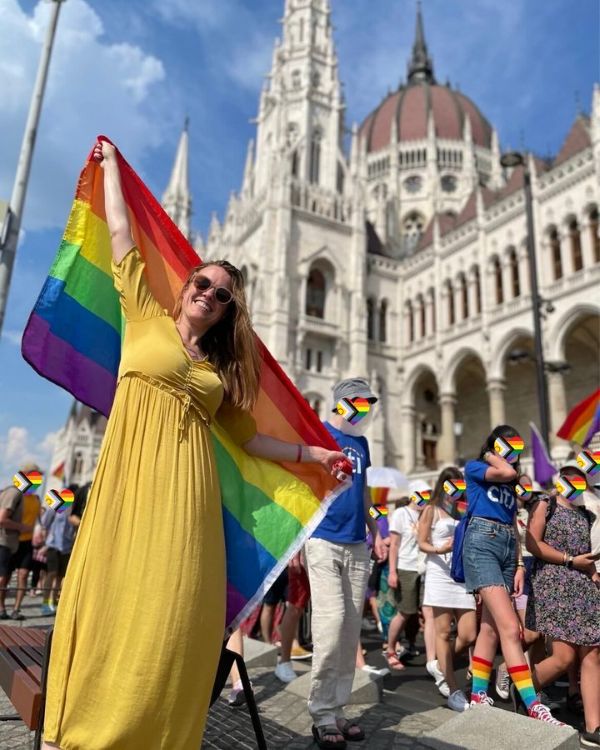
Hungary’s government submitted a bill to parliament aimed at removing anti-LGBTQ+ rules prohibiting the “promotion of homosexuality” to minors, which former Prime Minister Viktor Orbán‘s government enacted. Prime Minister Péter Magyar also announced plans to amend a 2020 law that barred same-sex couples from adopting children.
Orbán, who claimed to defend Christian values, implemented several laws that restricted LGBTQ+ rights, including the abolition of the legal option to change gender on personal documents and a ban on educational materials promoting homosexuality or gender reassignment. These policies had serious repercussions for the LGBTQ+ community. Orbán’s anti-LGBTQ+ legislation is reminiscent of similar laws enacted by Vladimir Putin in Russia.
In April, ahead of the elections, the Court of Justice of the European Union ruled that Orbán’s government violated European law by stigmatising gay and transgender people through restrictive regulations. While same-sex marriage remains illegal in Hungary, registered partnerships are recognised.
Towards LGBTQ+ rights restoration
Orbán’s government has implemented a far-right agenda. This includes a 2021 ban on the display and promotion of homosexuality and gender change in media for those under 18. Orbán claimed these anti-LGBTQ+ laws were meant to protect children, but they have faced significant criticism from rights groups and the European Union.
In May, Hungary’s new Justice Minister, Márta Görög, acknowledged the need to revise these laws to put an end to gay and transgender discrimination. Prime Minister Péter Magyar aims to mend Hungary’s ties with the EU, which requires addressing concerns about democratic standards and minority rights.
The proposed draft bill seeks to ban materials that could “seriously impair a child’s physical, intellectual, emotional, or moral development,” focusing on the real dangers children face, such as pornographic content and sexual exploitation.
Changing same sex couples’ adoption laws
Prime Minister Magyar announced on Saturday that the Hungarian government will initiate changes to adoption laws concerning same-sex couples. On 12 September, he detailed the plans to amend a 2020 law that restricted adoption rights for same-sex couples.
Before the end of 2020, same-sex couples in Hungary were allowed to adopt children, provided that one partner applied as a single individual. However, the law enacted by Orbán’s government mandated that single applicants obtain special approval from the Minister of Family Affairs to adopt, effectively creating a de facto ban on adoptions by same-sex couples.
This proposed revision to the adoption system represents a crucial step toward restoring LGBTQ rights in Hungary. During a press conference, Prime Minister Magyar articulated his vision for this change, stating, “We can say unequivocally that we are changing this system. A minister or a politician should not decide such cases, but experts who can assess the conditions in which a child can live, ensuring they become happy and well-adjusted members of society.”
The end of the Orbán era
In the April parliamentary elections, the opposition Tisza party of Péter Magyar won decisively, securing 141 of the 199 seats in parliament, while the Fidesz party won 52 seats. After the election, Magyar became prime minister, ending Orbán’s long tenure.
During his 16 years in office, Orbán oversaw the establishment of a governance framework characterised by corruption, which adversely affected the rule of law and curtailed fundamental freedoms. This included passing legislation that impacted judicial independence, academic freedom, media freedom, and the rights of social and minority groups. Furthermore, his alliance with Vladimir Putin has raised concerns regarding EU unity and security, leading to Hungary’s isolation within Europe.
Moreover, the current government has launched multiple investigations into Orbán’s engagements with China. These inquiries include potential fraud associated with the prior government’s procurement of ventilators, valued at approximately $965 million, during the COVID-19 pandemic. Investigators are also examining a major foreign investment from the Chinese automaker BYD, which former Foreign Minister Péter Szijjártó facilitated.
