
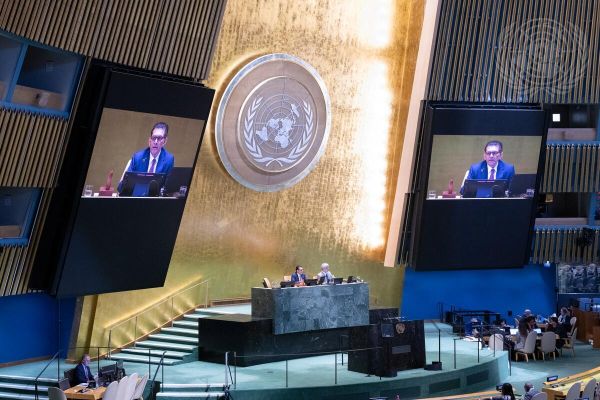
Amid ongoing global conflicts and deep divisions, world leaders will gather at the United Nations this week to address urgent issues, including the potential threats posed by uncontrolled artificial intelligence. At the same time, climate shocks and rising prices are making life harder for hundreds of millions of people worldwide.
This annual high-level meeting at the UN General Assembly will highlight critical conflicts in regions such as Iran, Gaza, Ukraine, Sudan, Congo, and Myanmar, prompting a crucial question: What actions can leaders take to resolve these conflicts? They will also confront the ongoing climate crisis, which poses a serious threat to our planet’s future, as well as widening inequalities within and among countries. Economic disruptions, including blocked shipping routes and strained supply chains, are raising living costs and hindering economic growth.
The future of the United Nations itself will also be a key focus of discussion. Founded 81 years ago, the UN still reflects the power dynamics of the nations that prevailed in World War II, rather than the primary global players of the 21st century. The UN’s 193 member countries have recently agreed to a comprehensive reform package designed to modernise essential institutions, including the powerful UN Security Council, where the United States, Russia, China, Britain, and France maintain considerable influence through their veto powers. However, executing these reforms presents considerable challenges.
Behind the scenes, speculation regarding the next Secretary-General of the United Nations is likely to arise, as current Secretary-General António Guterres‘ second five-year term concludes on 31 December, and no definitive successor has yet emerged.
UNGA still important
The United Nations remains the key gathering place for its 193 member countries. Around 130 heads of state and government are set to speak at the General Assembly starting Tuesday, including US President Donald Trump and French President Emmanuel Macron, following UN Secretary-General António Guterres’ opening address. On Wednesday, Ukrainian President Volodymyr Zelenskyy and Iranian President Masoud Pezeshkian will speak, while Israeli Prime Minister Benjamin Netanyahu will address the assembly on Thursday.
Palestinian President Mahmoud Abbas will not attend due to a US visa denial but will speak via video. Notably absent are Chinese President Xi Jinping, who will meet Trump, Russian President Vladimir Putin, and Indian Prime Minister Narendra Modi.
France’s UN ambassador, Jérôme Bonnafont, stressed the importance of supporting the UN during these polarised times, advocating for cooperation and dialogue over confrontation.
This year has been tough for the United Nations, sidelined in its role of ensuring international peace and security, especially in conflicts in the Middle East and Ukraine. The US failure to pay billions in dues has worsened the organisation’s finances.
Richard Gowan, director of the International Crisis Group’s global issues programme, noted that last year there were fears Trump might announce a US withdrawal from the UN. Though he didn’t, the organisation has faced financial constraints that have impacted its peacekeeping and humanitarian efforts.
Recently, the US paid $725 million towards its 2023 dues, allowing the Trump administration to retain its vote in the General Assembly. Gowan said the UN is no longer “in freefall,” but it remains in a “permanent crisis.” Mark Malloch-Brown, former UN deputy secretary-general, added that while the world still trusts the UN, there is a strong public desire for change.
AI raises global concern
The rapid advancement of artificial intelligence has become a major global concern, particularly because of the lack of industry regulations and guidelines. Days before a major summit, leaders from three leading AI companies warned that the technology could become uncontrollable and called for a pause in its development. Trump dismissed their concerns as “a hoax,” advocating for continued progress to keep the US ahead of China.
On Wednesday, the UN Security Council added a high-level meeting on AI to its agenda, highlighting the growing anxiety surrounding the issue. Earlier that day, it had scheduled a session on Ukraine with President Zelenskyy. The UN Secretary-General noted that this would be his final assembly with global leaders, emphasising the need for international cooperation in an uncertain era.
Various leaders will address critical topics such as rising sea levels, education funding, and gender equality, while many private meetings will occur in UN venues and other locations. Esther Brimmer, a senior fellow at the Council on Foreign Relations, said in-person discussions are essential to developing actionable solutions. However, she described the current situation as “much more serious and complex than in decades past.” Despite this, she expressed hope, acknowledging the lessons learned about international cooperation over the years.
This article used information from The Associated Press.
