
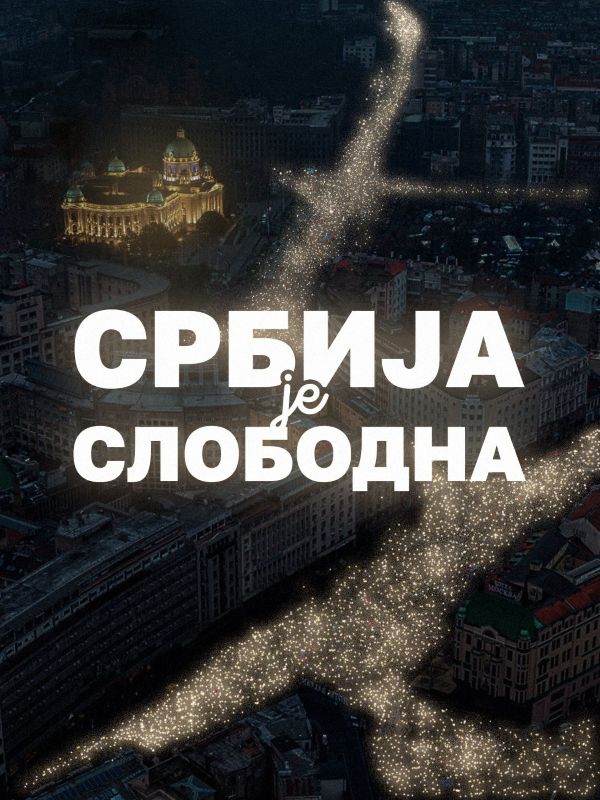
On Sunday, Aleksandar Vučić, Serbia’s long-serving authoritarian leader, conceded defeat in an election that highlighted a formidable student-led opposition movement that had protested his government for the past two years. This event signifies a significant political transformation in Serbia, where Vučić had exercised nearly absolute power for 14 years, supported by endorsements from Russian President Vladimir Putin. He had previously characterised the student movement as an effort orchestrated by foreign entities to undermine his administration.
The opposition’s electoral success represents a pivotal affirmation of democratic principles, a decisive stance against widespread corruption, and a clear endorsement of Serbia’s pro-European Union trajectory.
“Today, the people of Serbia turned out in record numbers to shape their country’s future. Congratulations to the Student List on its victory in the parliamentary elections. We stand ready to support reforms on the rule of law, media freedom, the fight against corruption and strong democratic institutions, and to work together to advance Serbia’s future in the European Union,” European Commission President Ursula von der Leyen posted on X.
After the election results, large crowds gathered in the streets of Belgrade and other cities across Serbia to celebrate. The election saw high voter turnout and heightened tensions, pitting Vučić’s right-wing Serbian Progressive Party (SNS) against university students who accused the government of corruption and eroding democratic values. Serbia’s 6.4 million voters were tasked with electing members to the country’s 250-seat Parliament.
In his address, Vučić said projections suggested the Students’ List, representing the youth-led opposition, would win 135 to 140 seats, while his SNS would win about 105. Acknowledging their victory, he mentioned the Students’ List at his party’s election-night gathering but also attributed his party’s loss to external factors, including the role of independent media, alleged interference by unnamed European countries, and what he termed an “American deep state.”
Belgrade celebrates
President Vučić announced that his SNS received approximately 1.7 million votes, while the Students’ List achieved about 2.2 million votes. After the results, Students’ List supporters celebrated by driving through Belgrade, expressing their sentiments by honking horns, singing, and chanting, “Aleksandar is gone,” in reference to President Vučić.
In a notable display of activism, crowds dismantled fences and tents at a park in central Belgrade, where Vučić supporters had camped for over a year. Some tents were subsequently set on fire in the now-abandoned encampment. President Vučić disclosed the election results about an hour and a half after polling closed, amid heightened tensions throughout the day.
Law enforcement in anti-riot gear established a perimeter around the election commission headquarters in central Belgrade. Special police vehicles were positioned near the pro-Vučić camp, and large groups of people dressed in black gathered at various locations across the city.
Anti-corruption protests led to Vučić’s fall
Aleksandar Vučić aimed to become Serbia’s prime minister after resigning from the presidency last month. Support for him has declined since 2024, when a concrete canopy collapsed at a train station in Novi Sad, killing 16 people and triggering youth protests over corruption and cronyism.
Dijana Hrka, mother of a victim, celebrated in Belgrade, saying, “I have been waiting for this moment for two years. Now I expect that they will all be held accountable.”
Despite the protests, Vučić retains significant support among many voters, who view him as a capable leader in uncertain times, a perception mainstream media has reinforced.
Student movement campaigned on rebuilding democracy
The increasingly authoritarian Aleksandar Vučić has consistently outmanoeuvred Serbia’s fractured opposition, but a leaderless youth movement has emerged as a formidable challenger. The Students’ List, shaped by university students but featuring little-known experts, athletes, farmers, and artists, aims to counter Vučić’s rule and restore community solidarity.
Their campaign focused on a non-partisan effort to rebuild Serbia’s economy and democracy, attracting disillusioned voters. Despite vilification from pro-government media, the students reached rural voters—Vučić’s strongholds—by cycling and walking across the country. Their success reflects a similar trend in Hungary, where increased youth participation helped oust Viktor Orbán after 16 years. This victory may resonate across Europe, where youth protests are becoming more common.
“I have just spoken by phone with the leaders of the Students’ List @studentblokade , who won the elections in Serbia, to congratulate them on their victory. I assured them of Hungary’s support. I was delighted to hear how much strength our victory in April had given them during this difficult struggle,” Hungarian Prime Minister Magyar Péter posted on X.
EU strongly monitored the vote
Recent predictions indicate voter turnout may reach about 70%, a figure not seen in Serbia since 2000. Throughout the day, long lines formed at polling stations in Serbia and in cities worldwide. Some members of the Serbian diaspora had to vote in the early morning because voting times were set to local Serbian time.
The recent electoral landscape in Serbia has been marked by irregularities, prompting scrutiny from the European Union as it considers Serbia’s candidacy for EU membership. Independent election monitors reported numerous irregularities on election day, including instances of voters being photographed while casting their ballots, raising concerns about potential voter coercion and vote-buying.
Both international and local election monitors have expressed apprehension regarding the safety and fairness of an election campaign marked by detentions, significant government control over media outlets, and allegations of surveillance and cyberattacks targeting activists.
In local elections conducted earlier this year across ten municipalities in Serbia, there were reported violent incidents involving journalists and activists. After the 2023 parliamentary elections, the opposition organised protests, citing claims of electoral fraud.
This article used information from The Associated Press.
