
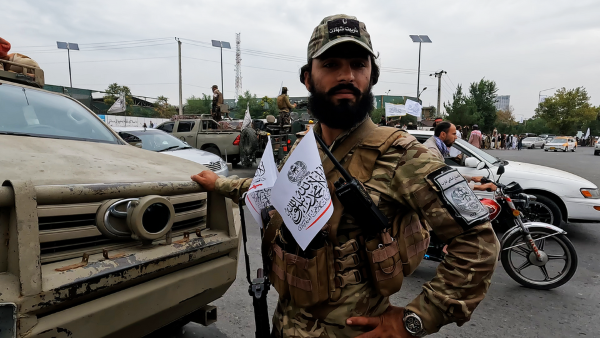
A delegation from the Afghan Taliban is scheduled to visit Brussels on Tuesday for closed-door discussions with officials from the European Union, with a primary focus on matters related to deportations. According to a Taliban representative, Afghans constitute one of the largest groups of migrants seeking asylum within the European Union. However, there is a growing trend among various governments within the 27-state bloc to accelerate and increase the deportation process for individuals whose asylum claims have been denied or who have committed criminal offences in their host countries.
Since the Taliban assumed control of Afghanistan in 2021, following the disorderly withdrawal of US-led forces, there have been significant and restrictive changes implemented regarding rights, particularly for women and girls. Human rights organisations have expressed concern that the upcoming meeting may undermine the European Union’s commitment to human rights and potentially endanger individuals both in Europe and Afghanistan.
“Any engagement with the Taliban needs to prioritise protecting human rights and accountability — not deporting people to danger there,” said Fereshta Abbasi, a researcher at Human Rights Watch. “EU countries are undermining their credibility by condemning Taliban abuses and pursuing accountability on one hand, while cooperating with the Taliban to return Afghans on the other forcibly.”
With no EU member state recognising the Taliban, the meeting in Brussels marks a slight shift in the regime’s diplomatic isolation since it took power five years ago. The five-member Taliban delegation, including spokesperson Abdul Qahar Balkhi, attended the meeting, according to a Taliban official.
Belgian Foreign Minister Maxime Prévot noted that while Belgium does not recognise the Taliban, it will grant visas as requested by the EU. He emphasised, “This does not signify recognition or legitimacy.”
The delegation received visas after security screening, allowing only 24 hours in Belgium and no access to other Schengen countries. The meeting will not occur in official buildings due to the lack of recognition of the Taliban government. The European Commission has declined to comment further.
Should we expect increased deportations?
A spokesperson for the European Commission announced on Monday that a meeting will be held in response to pressure from the majority of the 27 EU countries. In October, 20 of them signed a letter requesting stronger migration policies, including increased deportations.
“They have asked the Commission to coordinate technical discussions on returns,” said spokesperson Markus Lammert. “Member states are looking to return individuals who have committed serious crimes and may pose a security threat.”
The first EU-Taliban meeting occurred in Afghanistan in January, and the Commission continues to maintain staff there. Belgian Migration Minister Anneleen Van Bossuyt, who helped draft the October letter, stated that “we can no longer afford a standstill” and called for a united approach to regain control over migration and security. She noted that only 2% of the 22,870 Afghans ordered to return have done so.
Afghanistan is facing a humanitarian crisis as about 3 million Afghans have been forcibly repatriated from Pakistan and Iran over the past year, worsening food shortages and economic challenges. Taliban authorities have enforced strict restrictions on women and girls, including bans on education beyond primary school and significant limitations on employment and attire.
“The desperate scenes of people — including EU staff — fleeing Afghanistan are a recent memory. It is unconscionable that the EU would now try to deport people to Afghanistan, which has only become more dangerous in the meantime,” said Eve Geddie, Director of Amnesty International’s European Institutions Office.
In response to political pressure to enhance migration policies across the 27-member European Union, significant reforms have recently been implemented to strengthen collective regulations aimed at increasing deportations. These reforms include the establishment of designated “return hubs,” enhanced domestic surveillance capabilities, stricter border controls, and limited engagement with the Taliban government, despite the EU’s non-recognition of that regime due to serious concerns regarding human rights abuses.
As Afghanistan faces severe food shortages and ongoing economic challenges, the Taliban is seeking humanitarian assistance and aims to reduce its international economic and political isolation.
This article used information from The Associated Press.
