
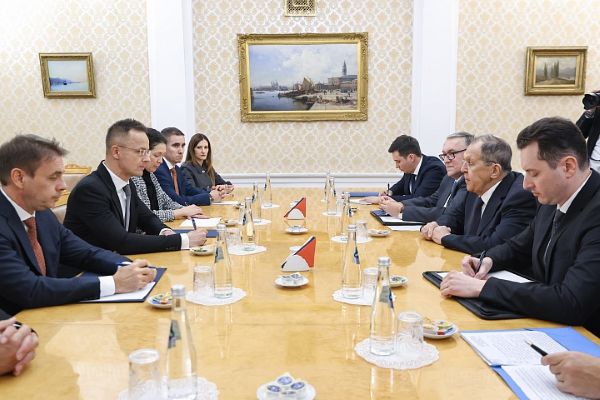
Viktor Orbán, Hungary’s authoritarian Prime Minister, pushed his country closer under the Kremlin’s control. Hungary has signed a 12-point plan with Russia aimed at enhancing cooperation in energy, trade, and culture, just days before the 12 April crucial parliamentary election. Finalised following discussions in Moscow in December, this agreement reflects a deepening of relations between Orbán’s regime and President Vladimir Putin‘s government, despite the existing EU sanctions related to Russia’s actions in Ukraine.
The plan was signed by Hungarian Foreign Minister Péter Szijjártó and Russian Health Minister Mikhail Murashko, and it encompasses vital sectors including nuclear fuel, oil and gas, education, and sports. The agreement seeks to revitalise trade adversely affected by EU sanctions and to permit Russian participation in new energy projects in Hungary. Additionally, the initiative aims to expand Russian-language education in Hungary and to strengthen cultural exchanges between the two nations.
One provision of the agreement underscores that the pursuit of closer ties should not conflict with Hungary’s obligations as an EU member. Furthermore, there have been indications that Minister Szijjártó has served as an informer of the Russian Foreign Minister Sergey Lavrov during European Council meetings.
The new trade agreement was reached under the auspices of the Russian-Hungarian Intergovernmental Commission on Economic Cooperation, which resumed its activities in 2024 after a cessation following the onset of the Ukraine conflict.
“Hungary’s collaboration with Russia is no longer speculation; it is documented. 🇪🇺 cannot function if a Member State actively undermines its security and unity. All tools must be used now, including suspending 🇭🇺 voting rights under Article 7 TEU,” MEP Riho Terras (EPP, Estonia), vice-Chair of the Defence Committee of the Parliament, posted on X on 8 April.
