
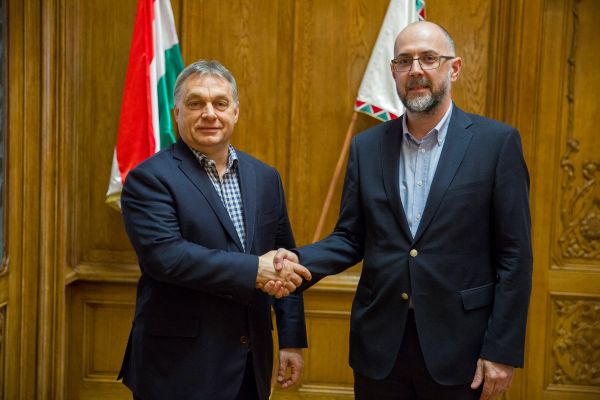
The transition of government in Hungary has significantly influenced the country’s relations with the European Union and its bilateral connections within the region. The regime established by Viktor Orbán, which lasted for 16 years, had notable implications across a range of issues, including economic cooperation, diplomatic relations, and political partnerships.
Hungarian minorities in neighbouring countries, particularly in Romania, Slovakia, and Ukraine, have played a vital role in the Orbán administration’s agenda. In Romania, for instance, over 1.2 million ethnic Hungarians, along with their political representation in the UDMR (Democratic Union of Hungarians in Romania), have been closely monitored by the government in Budapest. A considerable part of this community also holds dual citizenship, allowing them to vote in Hungary.
Since 1996, the UDMR has served as a junior coalition partner in various Romanian governments, frequently adjusting its alliances and effectively advocating for the interests of the Hungarian minority. The emergence of the new democratic government led by Prime Minister Péter Magyar presents an opportunity for the political landscape within the Hungarian minority to undergo democratisation. This shift has led to increased tensions between Budapest and the UDMR, which may have implications for the bilateral relations between Hungary and Romania.
Even before the end of the communist-led regime, Hungarian nationalism was on the rise, targeting the different Hungarian ethnic minorities in the surrounding countries, Romania, Slovakia, Soviet Ukraine, Yugoslavia, excluding Austria. In 1989, the largest opposition party, the Hungarian Democratic Forum (MDF), circulated a map of Great Hungary that included the areas of minorities in a new, larger map. Other parties endorsed this low-cost nationalism, which was instrumentalised by the Orbán regime.
The 16-year regime established a close partnership with the UDMR, which fortified the connection between the UDMR and Fidesz in Hungary. This dynamic has notably influenced the bilateral relationship between Romania and Hungary. Under Orbán’s administration, the Hungarian government has allocated millions of euros to foundations affiliated with the UDMR. Furthermore, Hungarian investment in Romania grew substantially during this period, positioning Hungary as the third-largest foreign investor in the country.
Before the recent elections that led to the downfall of Prime Minister Orbán’s government, UDMR leader Kelemen Hunor publicly endorsed the Hungarian Prime Minister, a move that drew significant attention. It is noteworthy that during the April elections in Hungary, a considerable majority of the Hungarian minority in Romania supported Orbán.
The newly established government in Budapest is actively working to distance itself from the UDMR leadership. This strategy has resulted in increased tensions both in the relationship with the UDMR and within the broader Hungarian state apparatus. Nevertheless, significant changes are not anticipated at this time. Prime Minister Péter Magyar’s priorities include the democratisation of state structures, the judiciary, and the media.
The UDMR currently maintains a strong position in Romania, and any initiative to modify its leadership or policies should be approached with caution and consideration. An ill-considered decision from Budapest could exacerbate tensions, adversely affect the minority population, and incur substantial political costs for the Hungarian government. Conversely, the UDMR’s influence is significantly bolstered by its ties to Hungary, and its leadership must remain cognizant of the political landscape in Budapest.
Therefore, the challenge for Prime Minister Péter Magyar is to determine how his administration can effectively engage with the ethnic Hungarian electorate in Romania, while transforming the UDMR into a constructive partner for Budapest.
