
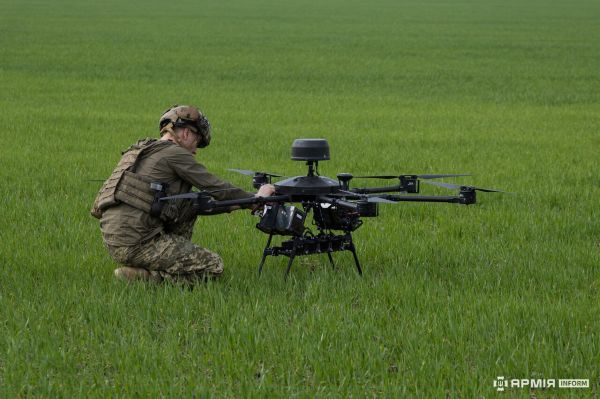
The Ukrainian war effort could be put under severe stress due to its dependence on China, despite years of tremendous growth in its drone industry and attempts to disentangle from over-reliance on Beijing. Ever since the beginning of the war with Russia, Ukraine quickly developed a strong drone industry, placing itself at the frontline of this technology.
However, this advanced system still has a glaring problem: production relies on China. So far, Beijing has supplied both sides with materials, but for years it has been slightly more supportive of Russia. A shift in this policy, or tighter export controls, could spell disaster for Ukraine.
Kyiv has been aware of this and, with its companies specialised in drones, has tried for years to reduce exposure to China. To a degree, it is succeeding. Ukrainian drone maker Vyriy relied on China for nearly 90% of the components in its attack drones just three years ago, while now 70% to 80% of the components are made in Ukraine.
According to Ukraine Customs Data, in 2024 Ukraine imported almost 90% of drone parts from China, a figure that has dropped to just 28% so far in 2026. However, these numbers mask how many components still made in China enter the country via third parties, like Poland or the Czech Republic.
One issue involves raw materials. Thermal cameras, crucial for targeting, use germanium, a material China produces in abundance. Ukraine may gain the know-how and produce them itself, but it will never match Chinese production in scale or cost. Currently, Ukraine needs around 4 million thermal sensors per year. Europe produces 600,000 in total, mostly for domestic use.
Scale and costs are also crucial issues that hamper any full disentanglement from China. Ukraine can assemble most parts, but China can do it faster, cheaper, and in greater numbers, making full independence from it difficult to achieve in the near future.
Another issue for Ukraine is that it competes directly with Russia for the same components. Russia may lag behind Ukraine in drone technology and is even more reliant on China, but it is still buying Chinese tech. However, Moscow enjoys greater favour with Beijing and is therefore shielded from potential policy changes. Since 2023, China has tightened exports of drones and their components, with even tighter controls in the summer of 2026. These measures made it harder for Ukraine to obtain long-range civilian drones, motors, cameras, and infrared imaging equipment. Kyiv had to rely on third-party intermediaries, a longer, more expensive process.
So far, Chinese companies seem unfazed by government control and keep doing business with Ukrainian firms; with business remaining high, no abrupt end is in sight, but Ukraine needs to stay wary and ready for potential disruption.
This article used information from The Associated Press.
