
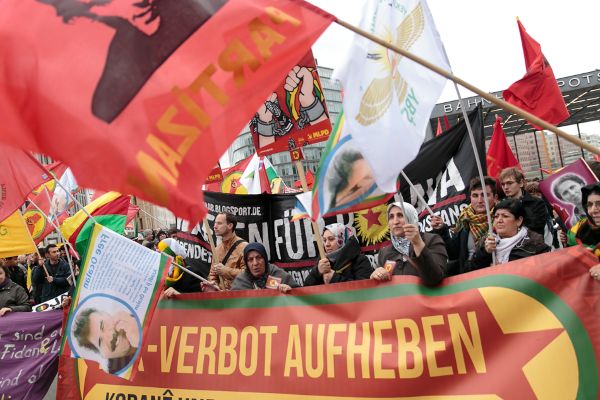
Turkey has recently completed the relocation of Abdullah Öcalan, the leader of the Kurdistan Workers’ Party (PKK) militant group, to a newly constructed section of the island prison where he has been held since 1999. This development is part of broader efforts to address the longstanding conflict, according to a senior Kurdish official. Enhancing the conditions of Öcalan’s imprisonment has been a significant demand from Kurdish representatives in the pursuit of resolving the 42-year conflict between the PKK and Turkish authorities.
Öcalan has been incarcerated on Imrali Island in the Sea of Marmara since his capture in 1999. Mithat Sancar, a Kurdish official and lawmaker with the pro-Kurdish DEM Party, confirmed this relocation during an interview with Medya Haber TV. While he did not disclose specific details about the new facility’s conditions, his remarks suggested the accommodations may be improved.
Sancar also emphasised the need to expedite the peace process, which he noted has been stagnant for the past two months. He stated that Öcalan’s move to the new section “necessitates an acceleration of the peace process.” Sancar is part of a group of DEM Party politicians who have regularly visited Öcalan since he called for the PKK to disband and disarm in February 2025.
As an influential figure among Kurdish communities, Öcalan is regarded as pivotal for advancing peace negotiations. Three months following his call, the PKK announced its intention to cease hostilities and disarm, prompting the Turkish parliament to approve legislation in August that offers conditional pardons to thousands of PKK fighters, which was subsequently signed into law by President Recep Tayyip Erdoğan.
The protracted conflict involving the PKK, designated as a terrorist organisation by Turkey, the United States, and the European Union, has resulted in the loss of tens of thousands of lives since 1984. Sancar stressed the importance of Öcalan’s role in coordinating peace negotiations, saying “the process cannot proceed with unilateral expectations and demands,” and advising that the Turkish government adopt a more flexible approach.
This article used information from The Associated Press.
