
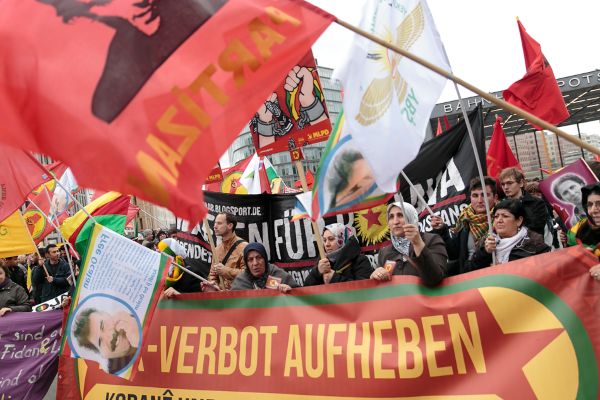
On Monday, 10 August, Turkey’s parliament passed legislation aimed at introducing a conditional pardon for thousands of Kurdish militants, as part of the government’s efforts to advance its peace initiative with the Kurdistan Workers’ Party (PKK). The legislation was approved by a significant majority, with 468 votes in favour and 88 against. The implementation of this measure is contingent upon the verification by Turkish authorities that the PKK has fully disarmed.
Last year, the PKK announced its decision to terminate its long-standing armed campaign against the Turkish state and expressed intentions to dissolve itself as part of the peace negotiations. This decision was made in response to a call from their imprisoned leader, Abdullah Öcalan. Following this announcement, the PKK conducted a symbolic disarmament ceremony in northern Iraq, where the group is primarily based, and stated that it would begin withdrawing fighters from key positions within Turkey to Iraq.
Regional implications expected
The new measure aims to resolve a conflict that has caused tens of thousands of deaths and may improve relations between Turkey and Iraq. It could also support the Syrian government’s efforts to consolidate areas previously controlled by the Kurdish-led Syrian Democratic Forces, affiliated with the PKK.
This legislation provides Turkish President Recep Tayyip Erdoğan with a chance to gain support from the pro-Kurdish Peoples’ Equality and Democracy Party (DEM) and potentially run for reelection if parliament calls for an early election.
The 12-article bill outlines procedures for disarming the PKK and rehabilitating its members. It suspends some prison sentences for convicted members and delays ongoing investigations for 5 to 10 years, depending on the offences. Cases will be dropped if no further crimes occur within that time. However, individuals convicted of intentional killings and those serving life sentences before 2005, including PKK leader Öcalan, are excluded.
Ministerial and parliamentary committees will monitor the disarmament process, which will take effect after Turkey’s National Security Council confirms the PKK’s disbandment. Eligible individuals will have six months to apply once the decision is published in the official gazette, with reports suggesting that exiled PKK members in Iraq and Syria could benefit.
“With the armed organisation laying down its arms and dissolving itself, we will build a new era in which peace, brotherhood, and solidarity will prevail,” Parliament Speaker Numan Kurtulmuş told reporters following the vote.
PKK: It is a start, but many things are missing
The PKK-linked ANF news outlet stated that the Turkish legislation represents a “beginning” in addressing issues but has “serious shortcomings.” They called for Öcalan’s release, asserting that the peace process can only progress if he can “live and work freely.”
The statement also highlighted that the legislation fails to address demands for democratic reforms and Kurdish rights, emphasising that PKK fighters will not surrender their weapons and return to Turkey without the ability to engage in democratic politics without fear of prosecution.
“The people of Turkey, who have paid a heavy price for many years, now have an opportunity to consolidate peace and build democracy,” Gülistan Kılıç Koçyiğit, of the pro-Kurdish DEM, told parliament. “Certainly, the proposal has its flaws, and we now bear the responsibility to rectify these issues,” she added, seemingly referring to the calls for enhanced rights for Kurds and for democratic reforms. Müsavat Dervişoğlu, the leader of the centre-right nationalist Good Party, which opposes the bill, said it “would pave the way” for Erdoğan to stay in power.
Conditions of Öcalan’s release might improve
DEM has urged that Abdullah Öcalan, imprisoned since 1999, be given official status to coordinate his release process. However, the current proposal does not mention his status or potential release. Reports indicate that his prison conditions near Istanbul may improve, allowing for better visiting rights and communication.
PKK has waged an armed insurgency since 1984, leading to tens of thousands of deaths and conflicts extending into Iraq and Syria. Designated as a terrorist organisation by Turkey, the US, and the EU, the PKK initially sought an independent Kurdish state but later shifted to demands for autonomy within Turkey. Previous peace efforts have failed, most recently in 2015.
This article used information from The Associated Press.
