
The European Parliament has advocated establishing a stronger, more principled EU-China policy that balances dialogue with the promotion of European interests. In a recommendation approved on Wednesday by a vote of 454 in favour, 86 against, and 110 abstentions, Members of the European Parliament (MEPs) highlighted the EU’s commitment to fostering a multilateral world. They underscored the importance of engaging with China on pressing global challenges, including peace and security, climate change, and human rights.
At the same time, MEPs acknowledged that bilateral relations have reached a critical juncture, largely due to China’s unfair economic practices and its position concerning Russia’s war against Ukraine. They expressed substantial concern over verified reports indicating that the Chinese military has trained Russian military personnel for involvement in Ukraine.
MEPs contend that the EU should work closely with the United States, G7 partners, and other like-minded nations to encourage China to use its influence over Russia to help end the conflict.
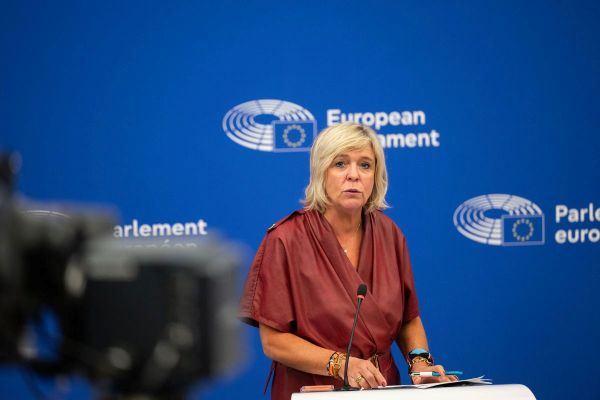
“Today’s majority marks a turning point in Europe’s China policy. With this week’s Franco-German initiative, a broad EU consensus is emerging on the need for a more balanced economic relationship with China. I hope Commissioner Šefčovič will take this united economic message to Beijing tomorrow. But this report goes even further: we want cooperation with China where possible, while standing firm on our security and values. As long as fundamental differences persist, systemic rivalry will also be part of our relationship,” rapporteur Hilde Vautmans (Renew, BE) said.
Direct engagement between the European Parliament and Chinese authorities resumed last year, after a suspension that began in 2021 when the Chinese government imposed sanctions on several MEPs in response to the EU’s human rights sanctions against certain Chinese officials and organisations. Between March and June 2026, three parliamentary delegations visited China, with a fourth visit scheduled for later in October 2026.
MEPs emphasised the urgent need to address the potential risks associated with the EU’s economic dependency on China. They called for a comprehensive de-risking strategy that focuses on critical raw materials, pharmaceuticals, batteries, electric vehicles, information and communication technology, semiconductors, and other strategic sectors. The Parliament has also called for enhanced investment screening and protection of vital technologies, infrastructure, and supply chains.
Furthermore, MEPs identified several challenges facing the EU economy, such as China’s industrial overcapacity, state subsidies, and barriers limiting European firms’ access to the Chinese market. They have called for reciprocity and a level playing field in trade and investment, supporting balanced EU actions when China does not adequately open its markets. They also advocated strengthening Global Gateway partnerships to provide a credible alternative to China’s Belt and Road Initiative, especially in Africa and Latin America.
The report reaffirms the EU’s One China policy and opposes any unilateral changes to the status quo in Taiwan through force or coercion. MEPs called for heightened resilience against cyber threats, foreign interference, espionage, and hybrid challenges, while also demanding a reinforced human rights dialogue with China focused on issues such as repression, forced labour, and policies in Tibet and Xinjiang.
The Parliament expressed significant concern about the recent adoption of the Law on Promoting Ethnic Unity and Progress and its potential to entrench assimilationist policies further. They also called for the unconditional release of political prisoners.
